Leão africano in savanna
1344×768 · AVIF · CC BY 4.0
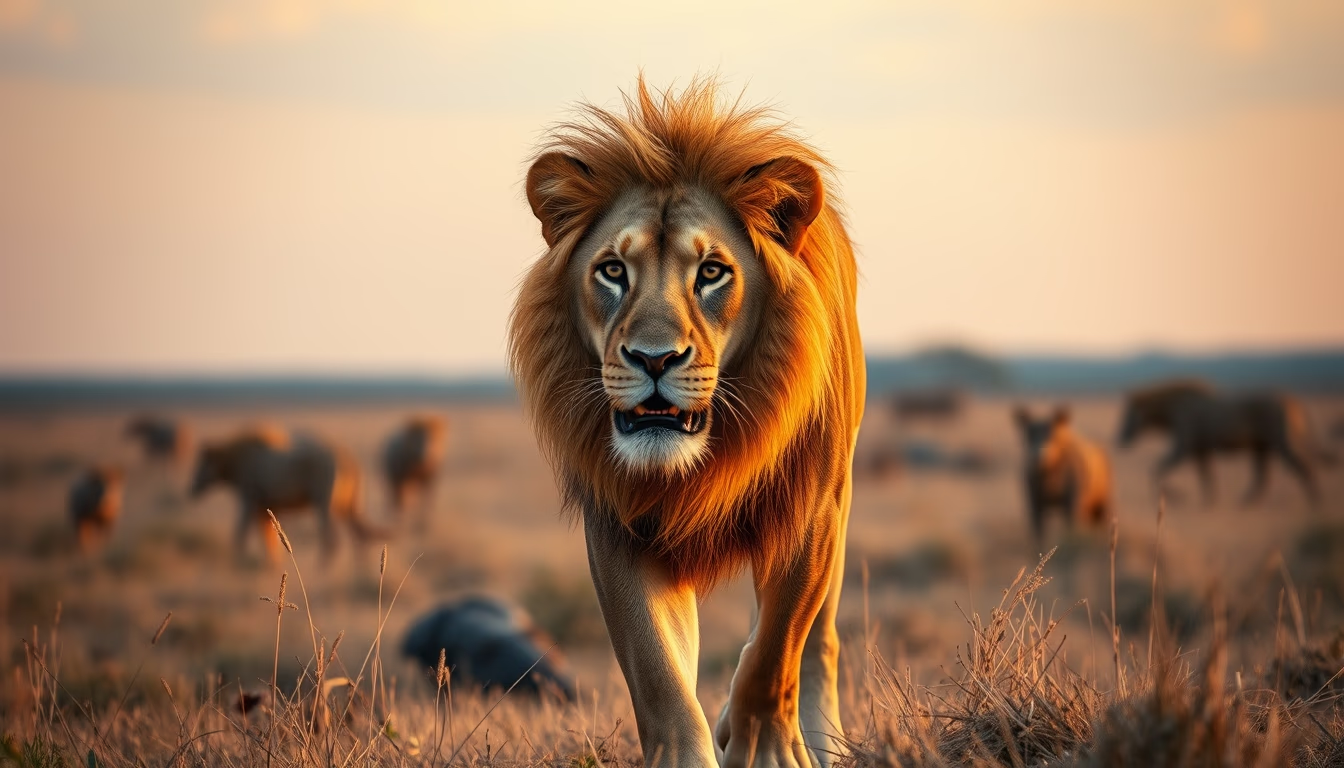
O leão africano, rei da savana, é um dos predadores mais emblemáticos do continente, com populações em declínio na região subsaariana.
Sobre o tema
O leão africano (Panthera leo) é o maior felino da África e o segundo maior do mundo, perdendo apenas para o tigre. Sua distribuição histórica abrangia quase todo o continente africano, mas hoje está restrita a populações fragmentadas em países como Tanzânia, Quênia, África do Sul e Botswana. A savana, com suas vastas planícies de gramíneas e árvores esparsas, é o habitat ideal para esses predadores, que dependem de cobertura para emboscar presas como zebras, gnus e búfalos.
Os leões são os únicos felinos verdadeiramente sociais, vivendo em grupos chamados de alcateias, que geralmente consistem de 2 a 18 indivíduos, incluindo fêmeas aparentadas, seus filhotes e um ou dois machos dominantes. As fêmeas são as principais caçadoras, trabalhando em equipe para abater presas de grande porte. Um leão pode consumir até 40 kg de carne em uma única refeição, mas passa a maior parte do dia descansando, cerca de 20 horas diárias.
A espécie enfrenta sérias ameaças, como perda de habitat, conflitos com humanos e caça ilegal. Estima-se que a população selvagem tenha caído de cerca de 200 mil indivíduos no início do século XX para menos de 25 mil atualmente. A União Internacional para a Conservação da Natureza (IUCN) classifica o leão como vulnerável, com algumas subespécies em perigo crítico. Iniciativas de conservação, como reservas e corredores ecológicos, são essenciais para sua sobrevivência.
Perguntas frequentes
Qual é a diferença entre leão africano e leão asiático?
O leão asiático (Panthera leo persica) é uma subespécie menor e com uma dobra de pele ventral mais pronunciada. Atualmente, existe apenas no Parque Nacional da Floresta de Gir, na Índia, enquanto o leão africano habita a África subsaariana.
Quantos leões existem na natureza atualmente?
Estima-se que restem entre 20 mil e 25 mil leões africanos na natureza, uma queda drástica em relação aos cerca de 200 mil do início do século XX. A espécie é classificada como vulnerável pela IUCN.
Por que os leões vivem em grupos?
Viver em alcateias permite que os leões cachem presas maiores de forma cooperativa, defendam territórios e filhotes com mais eficiência e compartilhem recursos, aumentando as chances de sobrevivência.
URL direta
https://pub-c7d6a6ea828543ac903a74a341ccb2e1.r2.dev/imagens/african-lion-in-savanna-cinematic-wide-shot-v2.avifComo creditar
Inclua um link visível de volta pro UtilizAí. Copie um dos snippets abaixo:
<a href="https://xn--utiliza-eza.com/midia/imagens/african-lion-in-savanna-cinematic-wide-shot-v2">Leão africano in savanna</a> by <a href="https://xn--utiliza-eza.com">UtilizAí</a>, licensed under <a href="https://creativecommons.org/licenses/by/4.0/">CC BY 4.0</a>.
[Leão africano in savanna](https://xn--utiliza-eza.com/midia/imagens/african-lion-in-savanna-cinematic-wide-shot-v2) by [UtilizAí](https://xn--utiliza-eza.com), CC BY 4.0
Licença: CC-BY-4.0