78 rpm shellac vintage
1344×768 · AVIF · CC BY 4.0
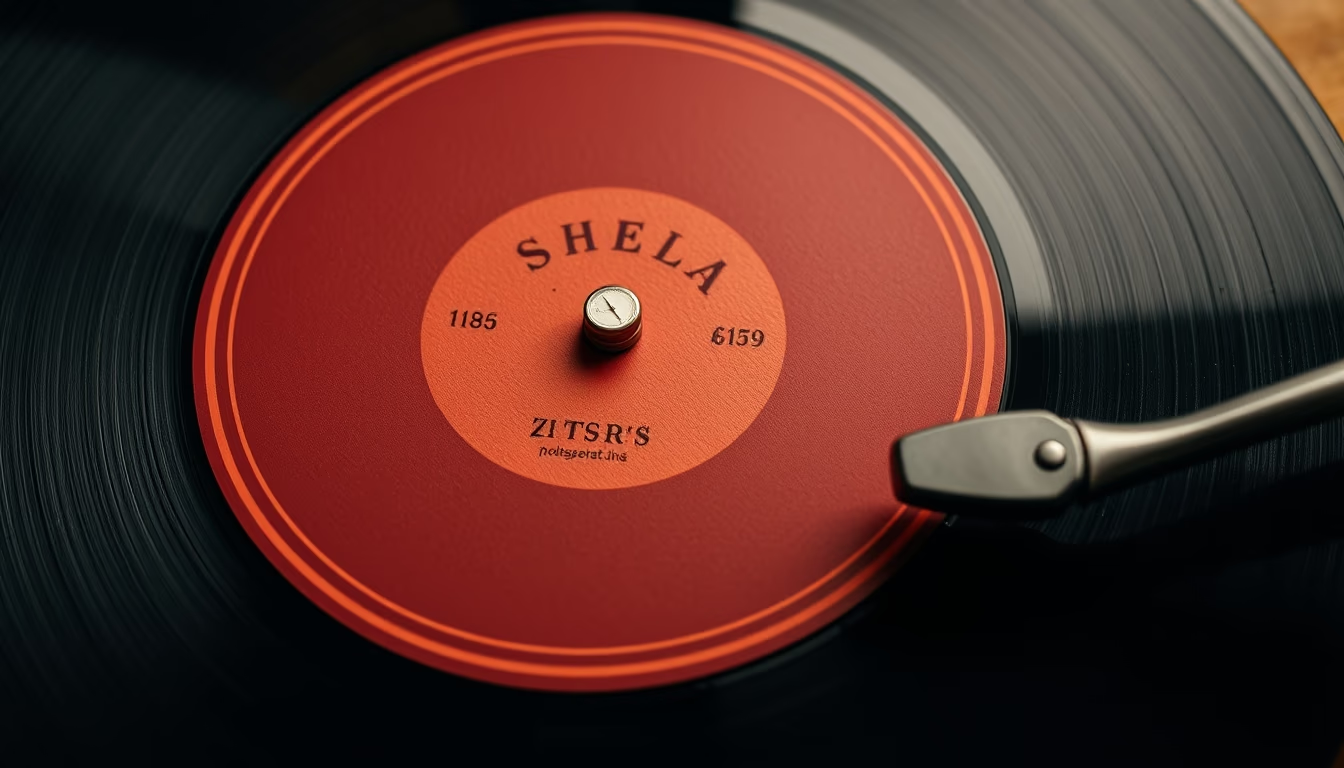
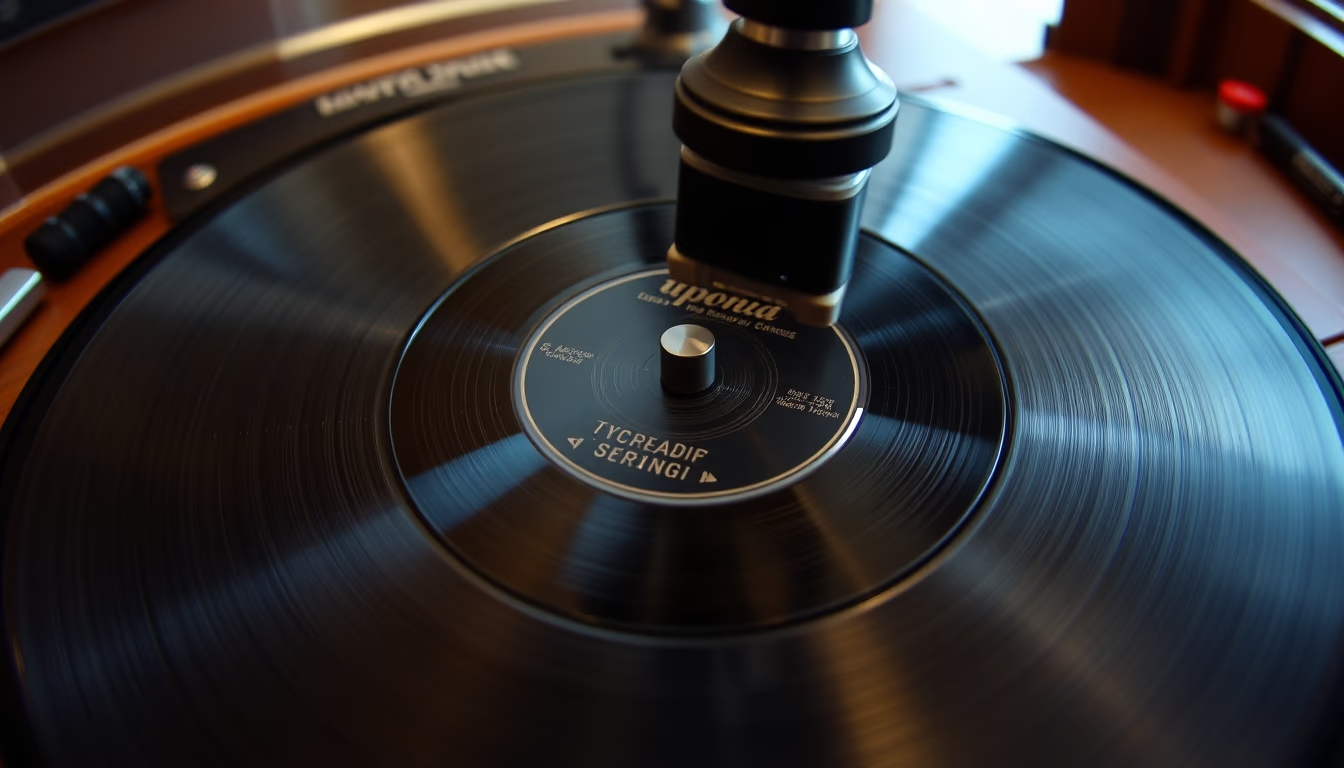
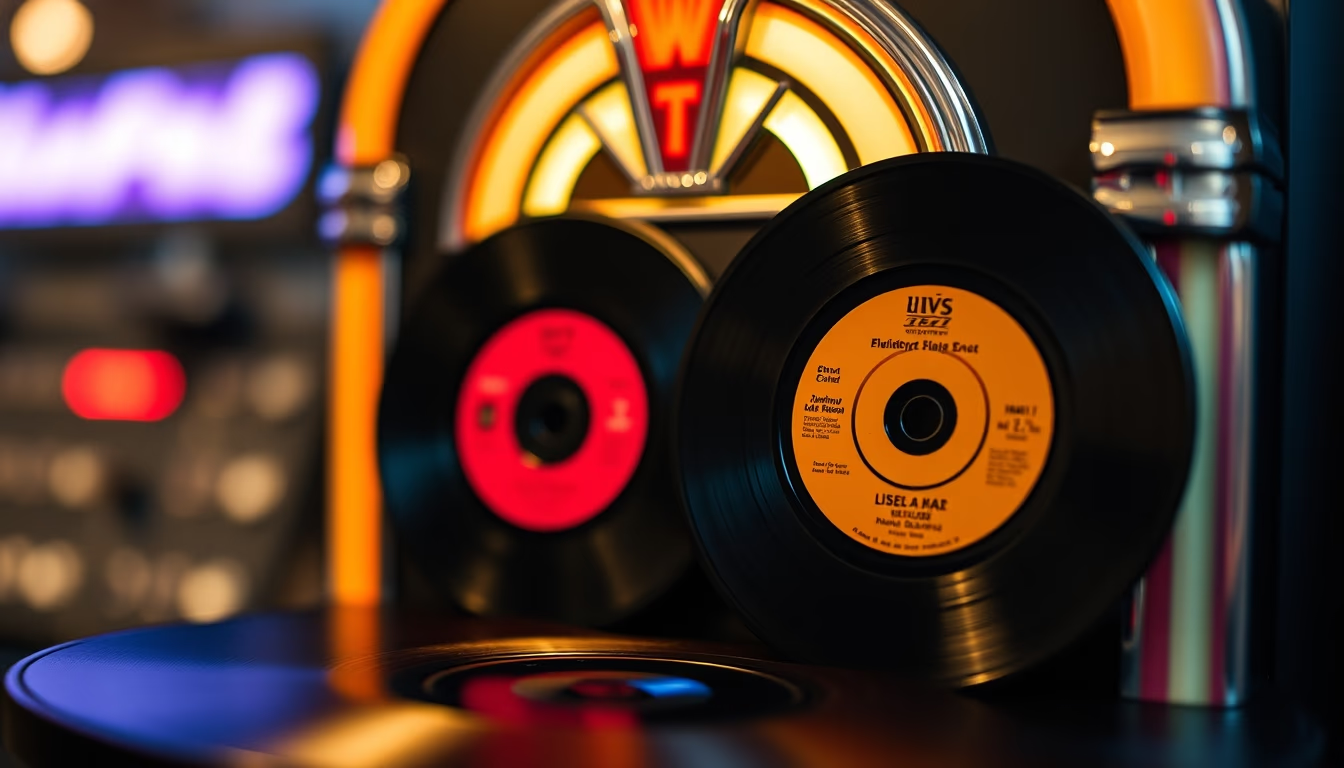
78 rpm shellac records: early 20th-century phonograph media that revolutionized home music and still captivate collectors.
About this subject
78 rpm records were the dominant sound recording medium from the early 1900s until the 1950s. Made from shellac, a natural resin secreted by the lac insect Kerria lacca, these discs were brittle and heavy, holding about three to five minutes of audio per side. The 78 rpm speed became standard in the 1920s, though earlier variations like 80 rpm existed. Manufacturing involved pressing a mixture of shellac, calcium carbonate, slate powder, and cotton fibers, giving them a characteristic black color and grainy surface that produces the background noise audiophiles now call “vintage warmth.”
Shellac made the records fragile, unlike later vinyl. A single scratch could ruin a track. Despite this, 78 rpm records dominated global phonograph sales, with labels like Victor Talking Machine, Columbia, and His Master’s Voice releasing everything from opera and jazz to Brazilian popular music, such as early sambas by Donga and Pixinguinha. In Brazil, local manufacturers like Odeon and RCA Victor recorded artists like Carmen Miranda and Noel Rosa.
The shift to 33⅓ rpm vinyl in the 1950s made 78 rpm obsolete for mass consumption, but they survived among niche audiences: vintage music DJs, collectors, and museums preserve these objects as artifacts of audio history. Today, well-preserved 78 rpm discs can fetch hundreds of dollars, depending on rarity and condition. Modern digitization techniques allow audio extraction without damaging the shellac, keeping early 20th-century musical heritage accessible.
Frequently Asked Questions
Why were 78 rpm records made of shellac?
Shellac was the available material that allowed high-volume pressing at low cost, though brittle. It replaced wax cylinders by offering greater durability and ease of mass production.
How to clean a 78 rpm disc without damaging it?
Use a soft cloth slightly dampened with distilled water or a shellac-specific solution. Avoid alcohol as it dissolves the resin. Never use vinyl brushes, as pressure can scratch the surface.
What is the difference between 78 rpm and 33⅓ rpm?
Rotational speed: 78 rpm yields about 3-5 minutes per side, while 33⅓ rpm used for LPs offers up to 30 minutes. Also, 78s are shellac, heavier and fragile; LPs are vinyl, lighter and flexible.
Direct URL
https://pub-c7d6a6ea828543ac903a74a341ccb2e1.r2.dev/imagens/78-rpm-shellac-vintage-isometric-flat-lay-fresh17.avifHow to credit
Include a visible link back to UtilizAí. Copy one of the snippets below:
<a href="https://xn--utiliza-eza.com/en/midia/imagens/78-rpm-shellac-vintage-isometric-flat-lay-fresh17">78 rpm shellac vintage</a> by <a href="https://xn--utiliza-eza.com">UtilizAí</a>, licensed under <a href="https://creativecommons.org/licenses/by/4.0/">CC BY 4.0</a>.
[78 rpm shellac vintage](https://xn--utiliza-eza.com/en/midia/imagens/78-rpm-shellac-vintage-isometric-flat-lay-fresh17) by [UtilizAí](https://xn--utiliza-eza.com), CC BY 4.0
License: CC-BY-4.0