View camera bellows
1344×768 · AVIF · CC BY 4.0
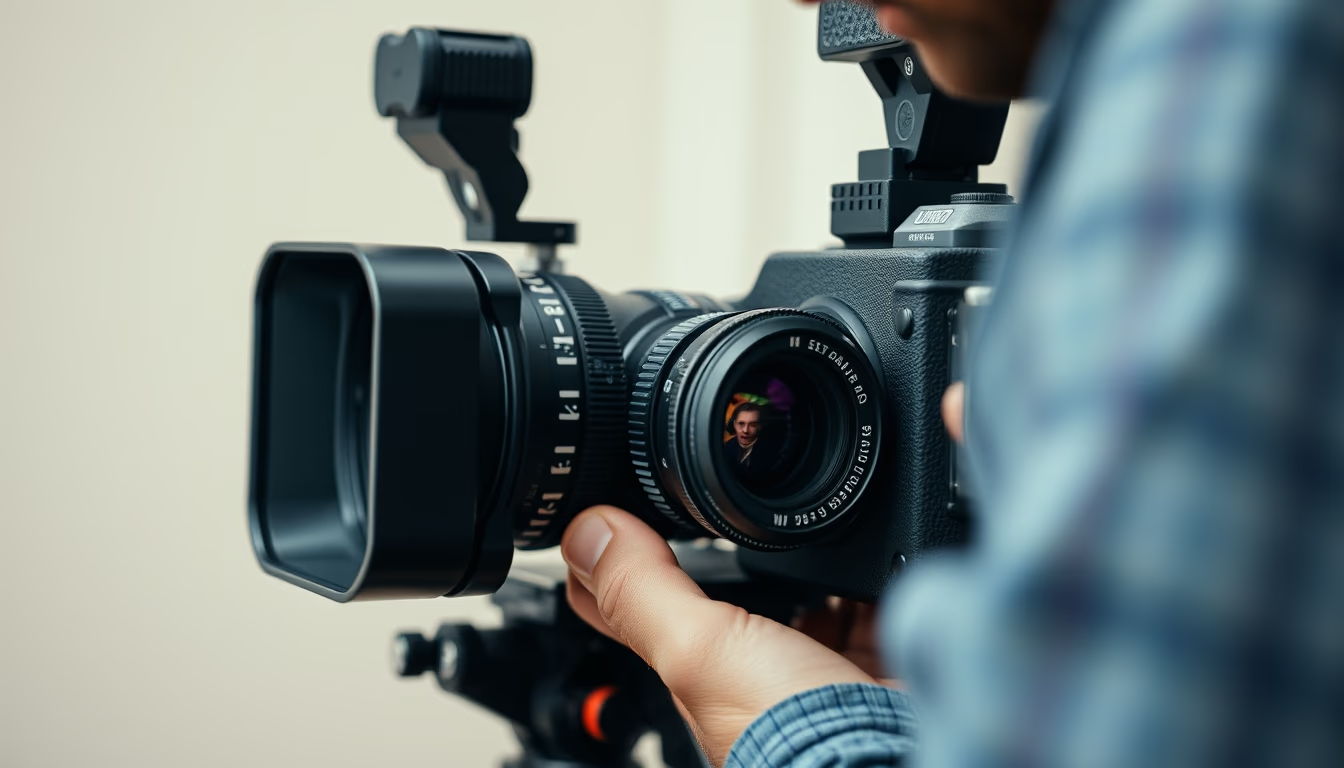
The bellows of a large format view camera enable focus and perspective adjustments, essential in professional analog photography.
About this subject
Large format cameras, also known as view cameras, use flexible bellows to connect the front standard (holding the lens) to the rear standard (holding the film or plate). These bellows are typically made of varnished canvas or leather folded in an accordion pattern, allowing movements such as tilt, shift, and swing. Such movements are crucial for controlling perspective distortion, especially in architectural and landscape photography. The bellows system was patented in the 19th century and became standard in portable and studio folding cameras.
Bellows must be absolutely light-tight, as any leak can fog the film. Their construction requires precision and high-quality materials. Classic cameras like the Sinar, Linhof, and Deardorff use leather or modern synthetic bellows. The maximum bellows extension determines the possible zoom range, as well as the minimum focusing distance. In field cameras, bellows can be exchanged for different lengths, adapting to wide-angle or telephoto lenses.
Interestingly, the bellows design influenced even digital medium format cameras, which adapted the movement principle for interchangeable lens systems. In Brazil, large format cameras were common in photo studios until the 1980s, especially for portraits and product photography. Today, there is a resurgence of interest in these cameras due to their unique image quality and the deliberate, slow process they require.
Bellows, besides being functional, have an aesthetic and tactile appeal that attracts collectors and artisanal photographers. Proper maintenance, such as dry cloth cleaning and storage in a ventilated space, prolongs their lifespan. Damaged bellows can be repaired or replaced by specialized craftsmen, keeping the analog photography tradition alive.
Frequently Asked Questions
What is the function of bellows in a large format camera?
Bellows allow independent movement of the front and rear standards, enabling adjustments of focus, perspective, and depth of field without geometric distortion.
Can bellows be replaced on a view camera?
Yes. Many field cameras allow exchanging bellows for different lengths, adapting the camera for wide-angle or telephoto lenses.
How to preserve the bellows of an antique camera?
Store the camera in a dry, ventilated place away from humidity. Clean bellows with a soft dry cloth, avoiding chemicals. Avoid excessive folding to prevent cracking of the material.
Direct URL
https://pub-c7d6a6ea828543ac903a74a341ccb2e1.r2.dev/imagens/view-camera-bellows-film-grain-authentic-fresh18.avifHow to credit
Include a visible link back to UtilizAí. Copy one of the snippets below:
<a href="https://xn--utiliza-eza.com/en/midia/imagens/view-camera-bellows-film-grain-authentic-fresh18">View camera bellows</a> by <a href="https://xn--utiliza-eza.com">UtilizAí</a>, licensed under <a href="https://creativecommons.org/licenses/by/4.0/">CC BY 4.0</a>.
[View camera bellows](https://xn--utiliza-eza.com/en/midia/imagens/view-camera-bellows-film-grain-authentic-fresh18) by [UtilizAí](https://xn--utiliza-eza.com), CC BY 4.0
License: CC-BY-4.0