View camera bellows
1344×768 · AVIF · CC BY 4.0
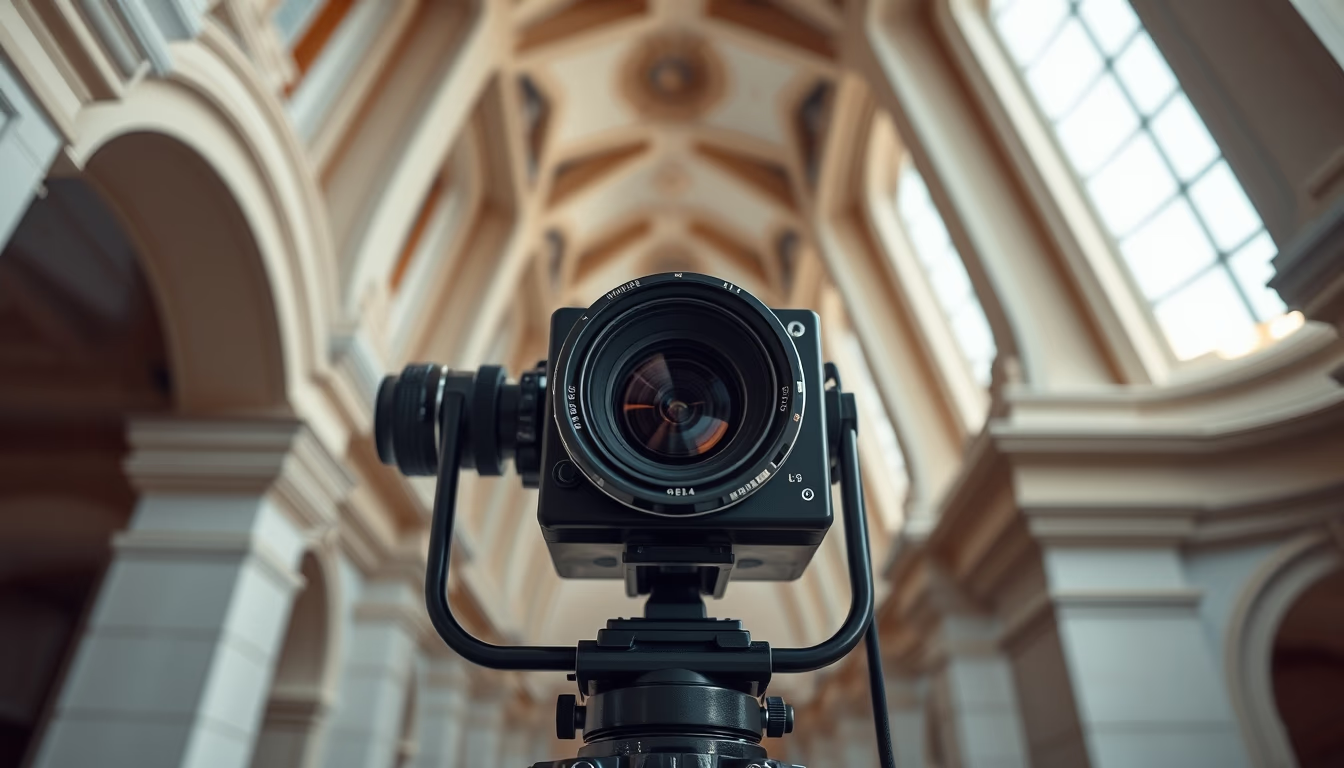
Fole de câmera de grande formato, essencial para a fotografia de arquitetura, permite movimentos de perspectiva e ajustes precisos.
Sobre o tema
Os foles são componentes fundamentais das câmeras de grande formato, também conhecidas como view cameras. Trata-se de uma estrutura articulada em formato de sanfona, geralmente feita de couro, lona encerada ou materiais sintéticos, que conecta o padrão frontal (onde fica a lente) ao padrão traseiro (onde está o filme ou sensor digital). Sua principal função é vedar a passagem de luz entre essas duas partes, ao mesmo tempo em que permite movimentos complexos como inclinação, deslocamento, rotação e deslizamento. Essa flexibilidade é crucial na fotografia de arquitetura, pois possibilita corrigir a convergência de linhas verticais, ampliar a profundidade de campo sem fechar o diafragma e controlar o plano de foco com precisão cirúrgica.
Historicamente, os foles surgiram no século XIX, com as primeiras câmaras de colódio úmido. A partir de 1900, câmeras como a Kodak Master View e a Deardorff popularizaram o design de foles duplos para maior extensão. Famous photographers like Ansel Adams used such cameras, relying on the bellows to achieve sharp focus and perspective control in landscape and architectural work. Até hoje, câmeras como a Linhof Technika e a Sinar P2 mantêm o uso de foles, combinando tradição com materiais modernos, como o poliuretano, que resistem melhor ao desgaste e a temperaturas extremas.
Na prática, o comprimento do fole determina a distância máxima que a lente pode se afastar do filme, influenciando a ampliação macro e o uso de teleobjetivas. Além disso, a rigidez do material impacta a estabilidade durante exposições longas. Em fotografia de arquitetura, é comum usar foles extras ou extensores para obter mais movimentos, especialmente com lentes grande-ângulas que exigem grande deslocamento. A manutenção dos foles é simples: mantê-los limpos e lubrificados com silicone para evitar rachaduras e vazamentos de luz, umidade que pode danificar o interior da câmera.
Perguntas frequentes
Qual a função dos foles em uma câmera de grande formato?
Os foles vedam a passagem de luz entre a lente e o filme, enquanto permitem movimentos como inclinação e deslocamento, essenciais para controle de perspectiva e foco.
Quais materiais são usados para fabricar foles de câmera?
Tradicionalmente feitos de couro ou lona encerada, hoje também se usa poliéster revestido ou poliuretano, que são mais duráveis e resistentes a condições climáticas adversas.
Como os foles influenciam a fotografia de arquitetura?
Eles permitem corrigir a distorção de linhas verticais (convergência) e ajustar o plano de foco, garantindo que fachadas e detalhes arquitetônicos sejam registrados com precisão e nitidez.
URL direta
https://pub-c7d6a6ea828543ac903a74a341ccb2e1.r2.dev/imagens/view-camera-bellows-architectural-photography-fresh17.avifComo creditar
Inclua um link visível de volta pro UtilizAí. Copie um dos snippets abaixo:
<a href="https://xn--utiliza-eza.com/midia/imagens/view-camera-bellows-architectural-photography-fresh17">View camera bellows</a> by <a href="https://xn--utiliza-eza.com">UtilizAí</a>, licensed under <a href="https://creativecommons.org/licenses/by/4.0/">CC BY 4.0</a>.
[View camera bellows](https://xn--utiliza-eza.com/midia/imagens/view-camera-bellows-architectural-photography-fresh17) by [UtilizAí](https://xn--utiliza-eza.com), CC BY 4.0
Licença: CC-BY-4.0