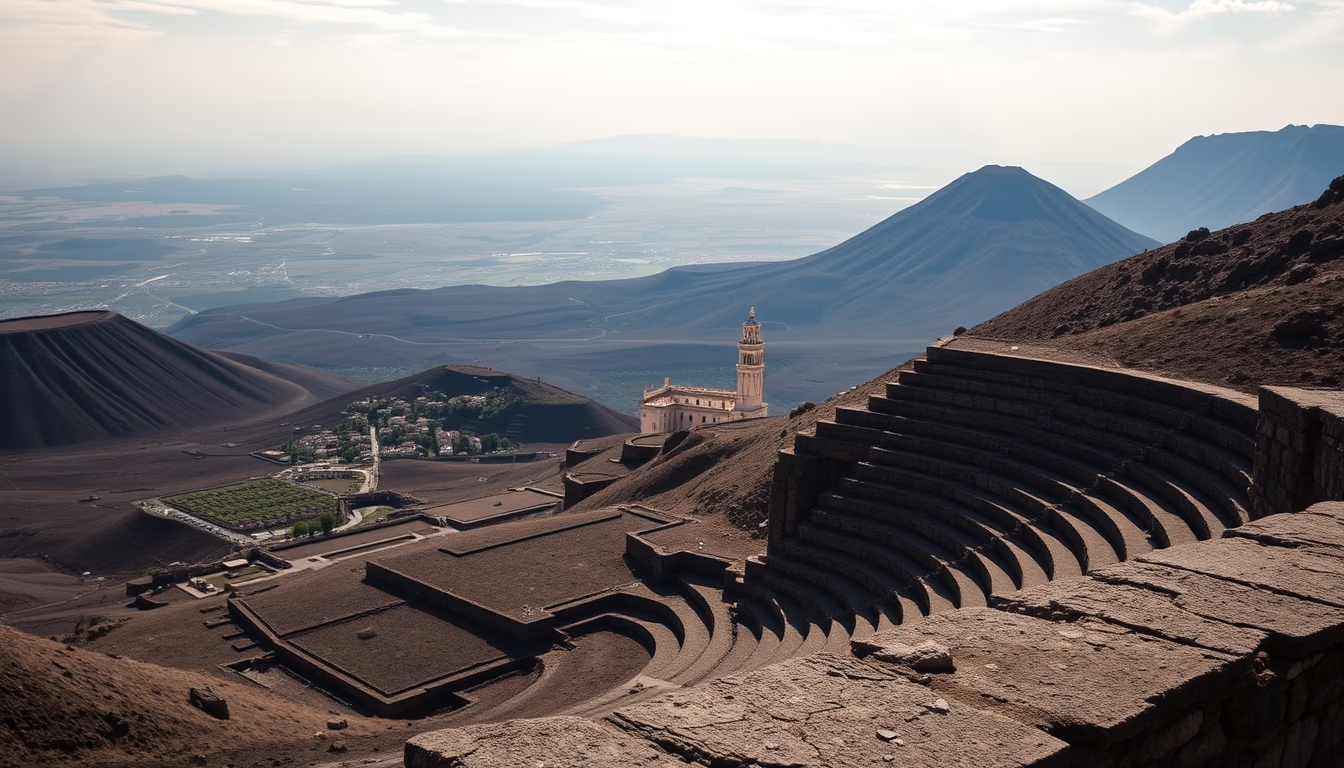
Vesuvius pompeii view
1344×768 · AVIF · CC BY 4.0

View of Vesuvius from Pompeii: the volcano that buried the Roman city in 79 AD and now dominates the Gulf of Naples landscape.
About this subject
Mount Vesuvius is one of the most famous volcanoes in the world, primarily for its catastrophic eruption in 79 AD that destroyed the Roman cities of Pompeii and Herculaneum. Located on the coast of the Gulf of Naples in Italy, it is the only active volcano on mainland Europe. Its formation began about 25,000 years ago, resulting from the overlap of volcanic cones. Vesuvius is part of the Campanian Volcanic Arc, a subduction zone between the African and Eurasian tectonic plates.
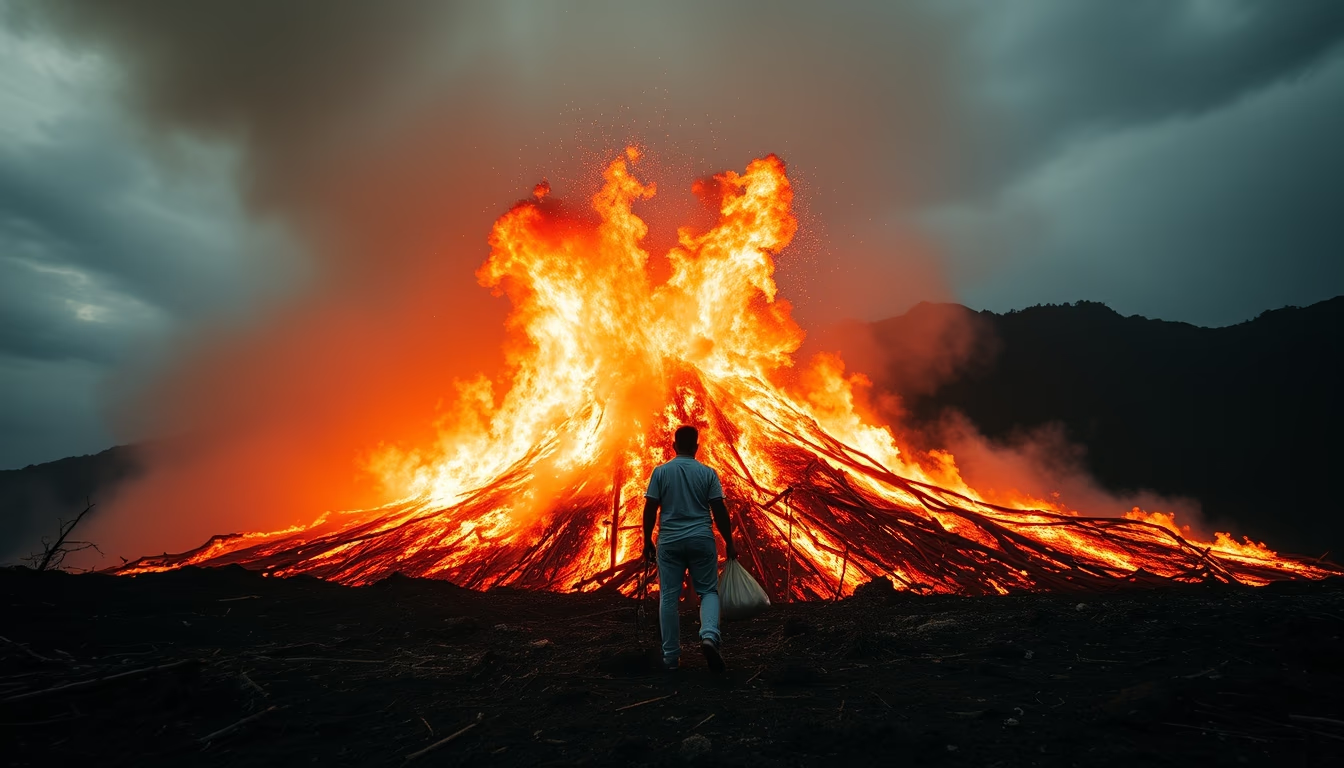
The 79 AD eruption was a Plinian type, characterized by a column of ash and gases that reached up to 33 kilometers in height. The city of Pompeii was buried under a layer of ash and lapilli up to 6 meters thick, preserving buildings, objects, and even the bodies of victims in their fleeing positions. This event was recorded by the Roman writer Pliny the Younger, who described the pine-tree-shaped cloud and the rain of pumice stones. Since then, Vesuvius has had other significant eruptions, such as in 1631, 1794, and 1944, the latter during World War II.
Today, Vesuvius is closely monitored by the Vesuvius Observatory, founded in 1841, the world's first volcanological observatory. Although it has been dormant since 1944, scientists warn of the high risk of future eruptions due to its history of explosive activity. The surrounding region, including the city of Naples, is densely populated, with about 3 million people living in the potential danger zone. The view of Vesuvius from Pompeii serves as a constant reminder of nature's power and human fragility in the face of unpredictable geological phenomena.
Frequently Asked Questions
What was the exact date of the Vesuvius eruption that destroyed Pompeii?
The eruption occurred in 79 AD, traditionally dated to August 24, but recent archaeological evidence suggests it may have been in October or November of that year.
Is Vesuvius still active?
Yes, Vesuvius is considered an active volcano, although it has been dormant since the last eruption in 1944. Scientists constantly monitor its activity due to the high risk to the nearby population.
How many people died in the 79 AD eruption?
It is estimated that between 10,000 and 25,000 people died in the cities of Pompeii, Herculaneum, and surrounding areas, mainly from asphyxiation by volcanic gases and burial.
Direct URL
https://pub-c7d6a6ea828543ac903a74a341ccb2e1.r2.dev/imagens/vesuvius-pompeii-view-fine-art-photography-fresh16.avifHow to credit
Include a visible link back to UtilizAí. Copy one of the snippets below:
<a href="https://xn--utiliza-eza.com/en/midia/imagens/vesuvius-pompeii-view-fine-art-photography-fresh16">Vesuvius pompeii view</a> by <a href="https://xn--utiliza-eza.com">UtilizAí</a>, licensed under <a href="https://creativecommons.org/licenses/by/4.0/">CC BY 4.0</a>.
[Vesuvius pompeii view](https://xn--utiliza-eza.com/en/midia/imagens/vesuvius-pompeii-view-fine-art-photography-fresh16) by [UtilizAí](https://xn--utiliza-eza.com), CC BY 4.0
License: CC-BY-4.0