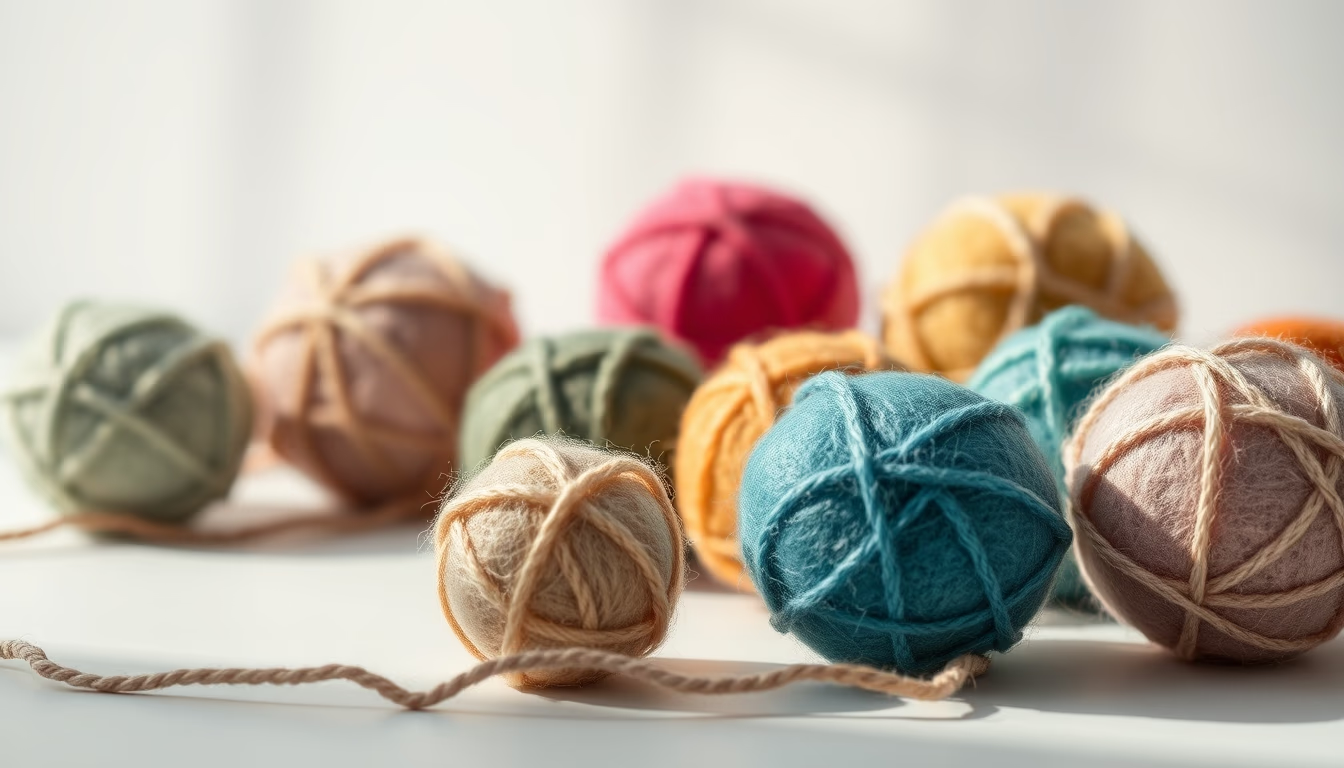
Spinning wheel antique
1344×768 · AVIF · CC BY 4.0

Antique spinning wheel, a centerpiece of textile history that transformed hand-spinning into large-scale thread production.
About this subject
The spinning wheel is one of the most important inventions in textile history, dating back to around 500 AD in India, though the European treadle version emerged in the 13th century. Before it, spinning was exclusively manual using a spindle and distaff, much slower. The spinning wheel increased productivity up to tenfold, enabling more uniform and stronger yarn production. During the Industrial Revolution, it was gradually replaced by more efficient machines like the spinning jenny, but it remained a symbol of craftsmanship.
In Brazil, the spinning wheel arrived with Portuguese colonizers and was used in rural communities and Jesuit missions to produce cotton and wool fabrics. It is still preserved in traditional craft regions, such as the Jequitinhonha Valley (MG) and bobbin lace making in Florianópolis. Antique pieces are valued by collectors and museums, such as the Museum of Yarn and Wheel in São Paulo, which houses 18th and 19th century specimens.
The spinning wheel consists of a large wheel driven by a treadle, which rotates an axle and moves the bobbin. The yarn is twisted as the wheel turns, controlling tension and thickness. Regional variations exist: the European spinning wheel with a large flywheel; the Indian charkha, small and portable (used by Mahatma Gandhi as a symbol of independence); and the double-treadle wheel common in the United States. Wood types vary from pine, oak to walnut, often hand-carved with details.
Interesting fact: the spinning wheel appears in fairy tales like “Sleeping Beauty,” where the princess pricks her finger on a distaff. In popular culture, it represents patience and manual skill. With the slow fashion movement and appreciation for handmade goods, the spinning wheel has regained use among enthusiasts who want to produce organic and unique yarn.
Frequently Asked Questions
What is the difference between a spinning wheel and a drop spindle?
A drop spindle is a simple hand tool consisting of a weighted stick used to twist fibers. A spinning wheel is a mechanical device with a rotating wheel that automates and speeds up the process, making it more efficient for large-scale yarn production.
How can I identify an antique spinning wheel?
Look for solid wood construction with patina, hand-carved details, tool marks, and a treadle wheel mechanism. Pieces from the 18th and 19th centuries often have sturdy builds and may bear maker's labels. Also check for wooden pegs and iron fittings.
Is the spinning wheel still used today?
Yes, it is used by artisans, traditional spinners, and slow fashion enthusiasts. It is valued for producing handspun yarn from raw wool or specialty fibers, and also as a decorative historical piece.
Direct URL
https://pub-c7d6a6ea828543ac903a74a341ccb2e1.r2.dev/imagens/spinning-wheel-antique-studio-editorial-portrait-fresh16.avifHow to credit
Include a visible link back to UtilizAí. Copy one of the snippets below:
<a href="https://xn--utiliza-eza.com/en/midia/imagens/spinning-wheel-antique-studio-editorial-portrait-fresh16">Spinning wheel antique</a> by <a href="https://xn--utiliza-eza.com">UtilizAí</a>, licensed under <a href="https://creativecommons.org/licenses/by/4.0/">CC BY 4.0</a>.
[Spinning wheel antique](https://xn--utiliza-eza.com/en/midia/imagens/spinning-wheel-antique-studio-editorial-portrait-fresh16) by [UtilizAí](https://xn--utiliza-eza.com), CC BY 4.0
License: CC-BY-4.0