Small family farmer tending to organic vegetables
1344×768 · AVIF · CC BY 4.0
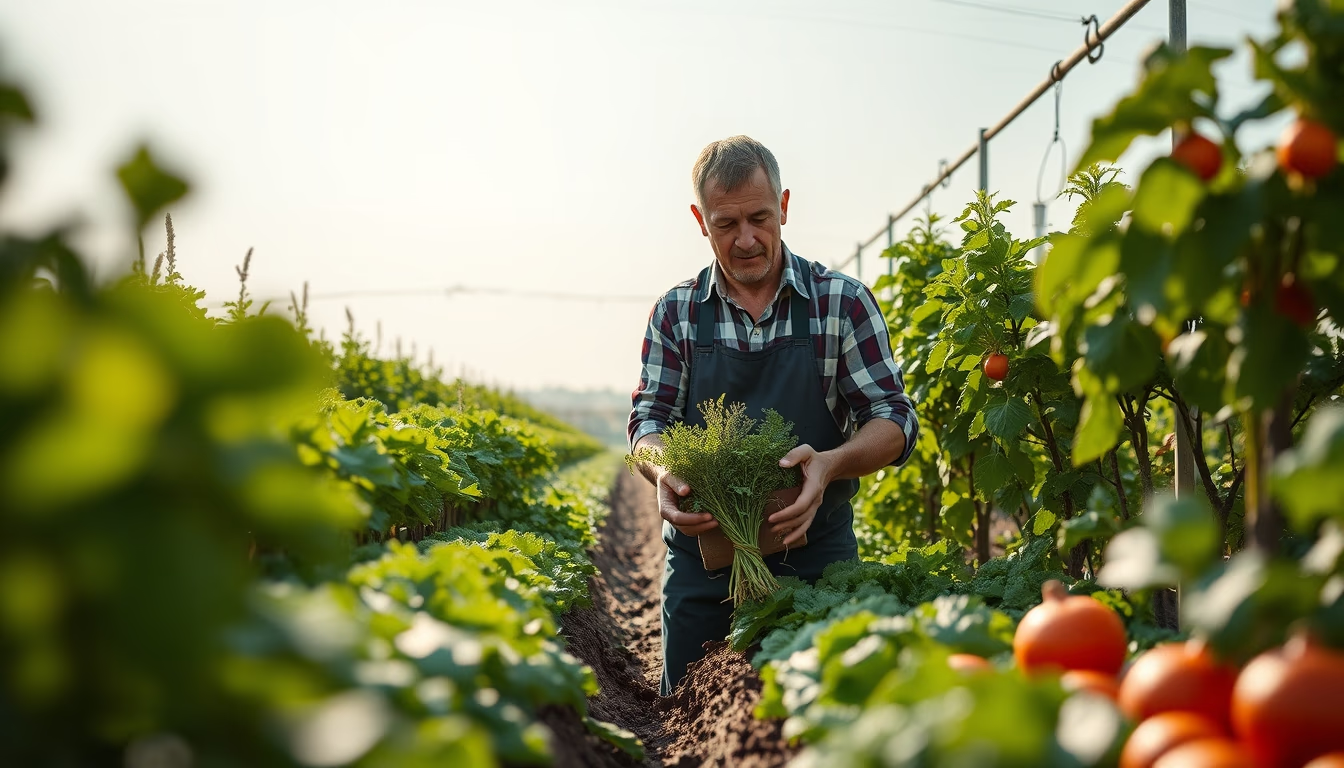
A small family farmer cultivates organic vegetables in rural Brazil, a practice that strengthens food security and preserves biodiversity.
About this subject
Family organic farming plays a crucial role in Brazil, responsible for about 70% of the food consumed in the country, according to IBGE. Small farmers, like the one portrayed, use agroecological techniques that avoid pesticides, chemical fertilizers, and transgenic seeds. This practice preserves soil health, water resources, and consumer health. In Brazil, there are approximately 4.4 million family farming establishments, occupying 80 million hectares and generating income for 15 million people, according to the 2017 Agricultural Census. Organic vegetables such as lettuce, tomatoes, and carrots are grown in rotation and intercropping systems, which increase land use efficiency and naturally reduce pests. The organic family farmer also contributes to reducing carbon emissions since soil organic matter is maintained and mechanization is minimal. However, these producers face challenges such as limited access to credit, technical assistance, and marketing channels. Initiatives like the National School Feeding Program (PNAE) and farmers' markets have boosted direct sales to consumers, ensuring fair prices and fresh food. The image shows the manual care of plants, characteristic of family farming, which values traditional knowledge and close observation of the local ecosystem. The visual symmetry suggests careful planning of the beds, common in small properties that optimize available space.
Frequently Asked Questions
What is the difference between family farming and organic farming?
Family farming is a production model where management and labor are done by the family, while organic farming is a system that excludes synthetic inputs. A family farmer may or may not be organic, but many adopt organic practices by tradition or certification.
How to identify genuine organic vegetables?
Look for the seal of the Brazilian Organic Conformity Assessment System (SisOrg) or buy directly from known producers. Organic products often have a less uniform appearance and may show insect marks, but they are free of pesticides.
What are the benefits of consuming organic vegetables from family farming?
Organic foods from family farming are fresher, more nutritious, and free of chemical residues. Moreover, supporting this model strengthens the local economy, generates rural jobs, and preserves the environment.
Direct URL
https://pub-c7d6a6ea828543ac903a74a341ccb2e1.r2.dev/imagens/small-family-farmer-tending-to-organic-vegetables-symmetric-bright-midday-6.avifHow to credit
Include a visible link back to UtilizAí. Copy one of the snippets below:
<a href="https://xn--utiliza-eza.com/en/midia/imagens/small-family-farmer-tending-to-organic-vegetables-symmetric-bright-midday-6">Small family farmer tending to organic vegetables</a> by <a href="https://xn--utiliza-eza.com">UtilizAí</a>, licensed under <a href="https://creativecommons.org/licenses/by/4.0/">CC BY 4.0</a>.
[Small family farmer tending to organic vegetables](https://xn--utiliza-eza.com/en/midia/imagens/small-family-farmer-tending-to-organic-vegetables-symmetric-bright-midday-6) by [UtilizAí](https://xn--utiliza-eza.com), CC BY 4.0
License: CC-BY-4.0