Navajo blanket pattern
1344×768 · AVIF · CC BY 4.0
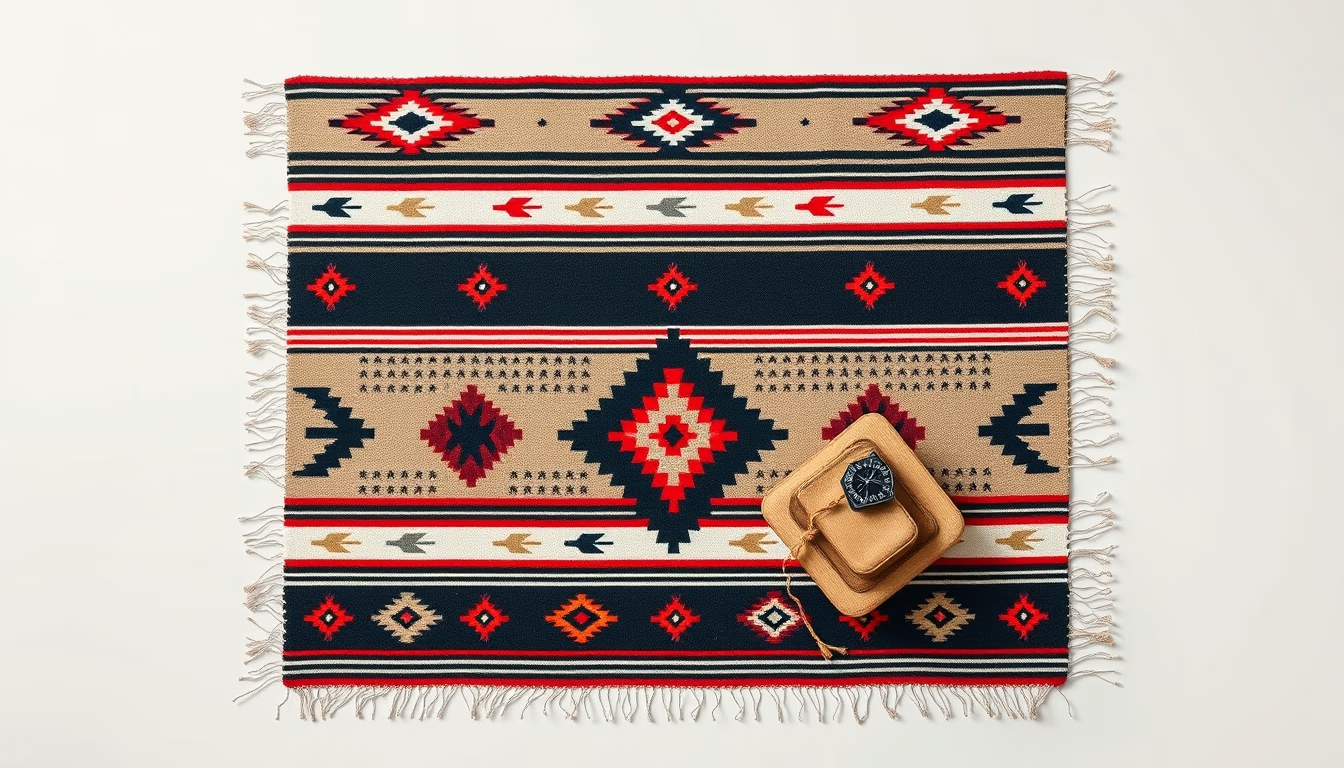
Navajo patterns, with geometric shapes and vibrant colors, are artistic expressions representing the culture and history of the Navajo people, going beyond mere decoration.
About this subject
Navajo patterns originate from the Navajo people, a Native American nation in the southwestern United States renowned for their weaving skills. Traditionally, these patterns were woven into wool blankets using ancestral techniques passed down through generations. The designs include elements like diamonds, zigzags, parallel lines, and stepped forms, often in colors such as red, black, white, and blue. These motifs are not random: they carry symbolic meanings, representing natural elements like mountains and lightning or spiritual concepts like protection and harmony.
From the 19th century onward, Navajo blankets gained popularity among traders and collectors, being marketed worldwide. This influenced the evolution of patterns, which began to incorporate new colors and designs while maintaining cultural essence. Today, Navajo patterns are recognized as symbols of cultural resistance and identity, reproduced in various products from clothing to decorative items.
Navajo weaving is a predominantly female craft, with weavers learning from a young age. The process involves using an upright loom and wool yarn dyed with natural pigments extracted from local plants and minerals. Each piece can take weeks or months to complete, depending on pattern complexity. These artifacts are not merely utilitarian; they are considered artworks that carry the history and spirituality of a people.
Frequently Asked Questions
What is the meaning of Navajo patterns?
Navajo patterns carry deep symbolic meanings, representing natural elements (such as mountains, lightning, and stars) and spiritual concepts (like protection, harmony, and the web of life). Each shape and color has a specific cultural purpose.
How are Navajo patterns made in traditional blankets?
Navajo blankets are handwoven on an upright loom, typically by women. They use sheep wool dyed with natural pigments from plants and minerals. The pattern is created by carefully interlacing threads, following designs passed down orally through generations.
Are Navajo patterns protected by copyright?
Many Navajo designs are considered cultural heritage and cannot be individually patented, though specific items may have protection. Unauthorized appropriation of sacred patterns is discouraged, and laws like the Indian Arts and Crafts Act in the US aim to combat counterfeits.
Direct URL
https://pub-c7d6a6ea828543ac903a74a341ccb2e1.r2.dev/imagens/navajo-blanket-pattern-isometric-flat-lay-fresh14.avifHow to credit
Include a visible link back to UtilizAí. Copy one of the snippets below:
<a href="https://xn--utiliza-eza.com/en/midia/imagens/navajo-blanket-pattern-isometric-flat-lay-fresh14">Navajo blanket pattern</a> by <a href="https://xn--utiliza-eza.com">UtilizAí</a>, licensed under <a href="https://creativecommons.org/licenses/by/4.0/">CC BY 4.0</a>.
[Navajo blanket pattern](https://xn--utiliza-eza.com/en/midia/imagens/navajo-blanket-pattern-isometric-flat-lay-fresh14) by [UtilizAí](https://xn--utiliza-eza.com), CC BY 4.0
License: CC-BY-4.0