Navajo blanket pattern
1344×768 · AVIF · CC BY 4.0
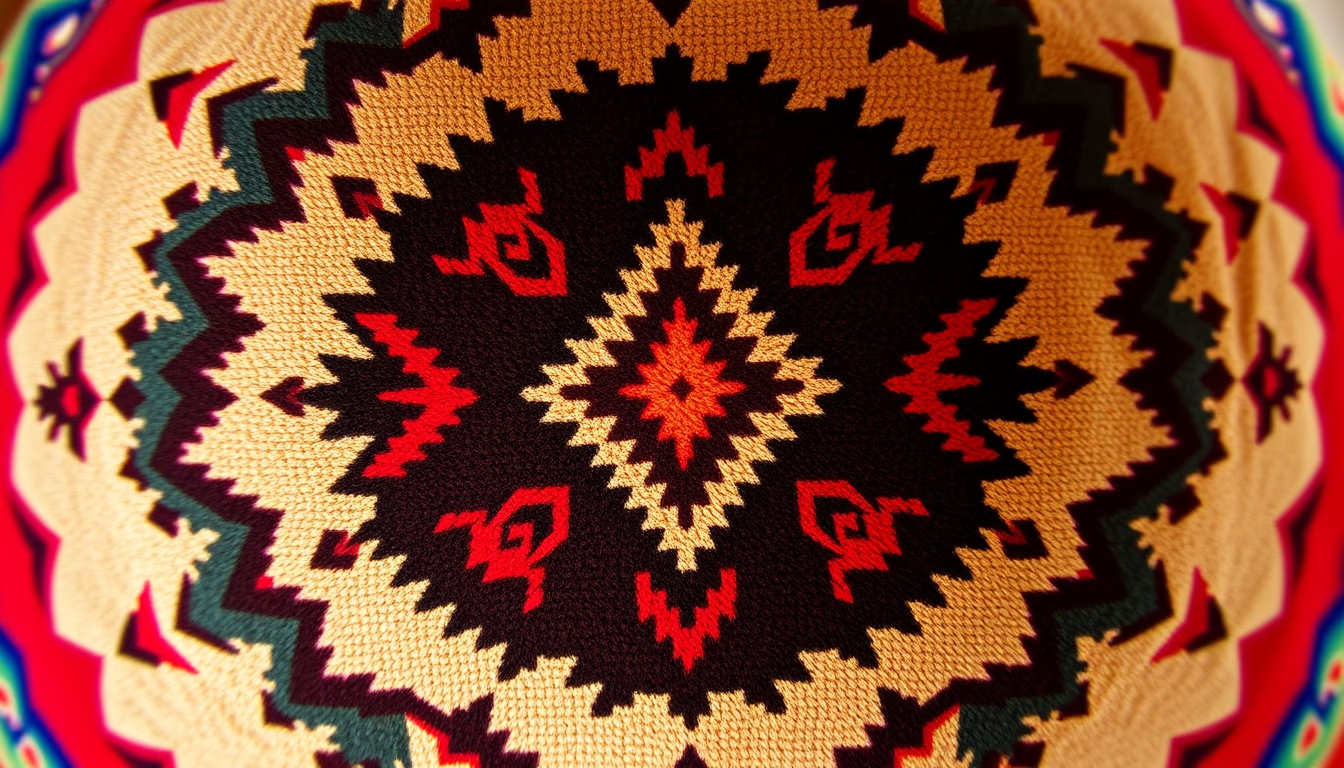
Navajo blanket patterns represent centuries of textile tradition, combining geometric symbolism, hand-loom techniques, and natural materials like Churro sheep wool.
About this subject
Navajo blankets, handwoven by Navajo women in the Southwestern United States, are globally renowned for their vibrant geometric patterns and deep cultural significance. The tradition dates to the 17th century, when the Navajo learned weaving from the Pueblo peoples but soon developed their own distinctive style. The upright Navajo loom, known as the "waist loom," enables tight, symmetrical weaves, resulting in durable and artistically complex pieces.
Iconic patterns include horizontal bands, diamonds, zigzags, and stepped forms, often representing natural elements like mountains, lightning, or stars, or spiritual concepts such as balance and harmony. The so-called "banded pattern" of early phases (First Phase, Second Phase, Third Phase) evolved into more intricate designs, such as the "eye-dazzler" pattern with contrasting colors and hypnotic repetition, popular in the late 19th century.
Traditionally, Navajo weavers used wool from Churro sheep, introduced by the Spanish, and dyed the yarn with natural pigments from plants, minerals, and even insects. Red, indigo blue, and black were common. Blankets served as clothing, bedding, trade items, and later commercial goods sold at trading posts. Today, Navajo weaving is preserved by artists who continue ancestral techniques, and antique pieces are valuable in museums and collections.
Interestingly, Navajo patterns are not merely decorative: each design can tell a story or convey knowledge. The symmetry and repetition reflect the Navajo worldview, based on balance between opposing forces. Despite external influences, the tradition remains resilient, and recognizing authenticity is key to valuing the work of contemporary weavers.
Frequently Asked Questions
What is the meaning of Navajo blanket patterns?
Geometric patterns in Navajo blankets often symbolize natural elements such as mountains, lightning, stars, and rainbows, as well as spiritual concepts like balance and harmony. Each design may carry a specific meaning conveyed by the weaver.
How are traditional Navajo blankets made?
They are handwoven on an upright loom called a waist loom. Weavers use wool from Churro sheep, spin the yarn, and dye it with natural pigments. The process can take weeks or months depending on complexity.
What are 'eye-dazzler' Navajo blankets?
They are Navajo blankets with dense geometric patterns and contrasting colors (red, blue, orange) that create a hypnotic visual effect. They became popular in the late 19th century after contact with non-Native traders.
Direct URL
https://pub-c7d6a6ea828543ac903a74a341ccb2e1.r2.dev/imagens/navajo-blanket-pattern-fish-eye-wide-angle-fresh15.avifHow to credit
Include a visible link back to UtilizAí. Copy one of the snippets below:
<a href="https://xn--utiliza-eza.com/en/midia/imagens/navajo-blanket-pattern-fish-eye-wide-angle-fresh15">Navajo blanket pattern</a> by <a href="https://xn--utiliza-eza.com">UtilizAí</a>, licensed under <a href="https://creativecommons.org/licenses/by/4.0/">CC BY 4.0</a>.
[Navajo blanket pattern](https://xn--utiliza-eza.com/en/midia/imagens/navajo-blanket-pattern-fish-eye-wide-angle-fresh15) by [UtilizAí](https://xn--utiliza-eza.com), CC BY 4.0
License: CC-BY-4.0