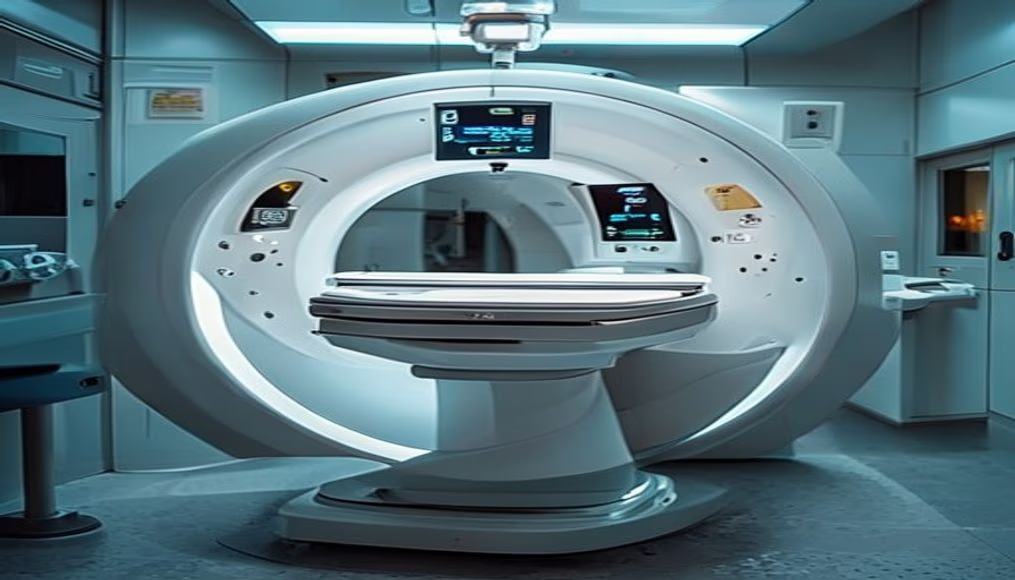
Mri scanner machine in radiology department
1344×768 · AVIF · CC BY 4.0
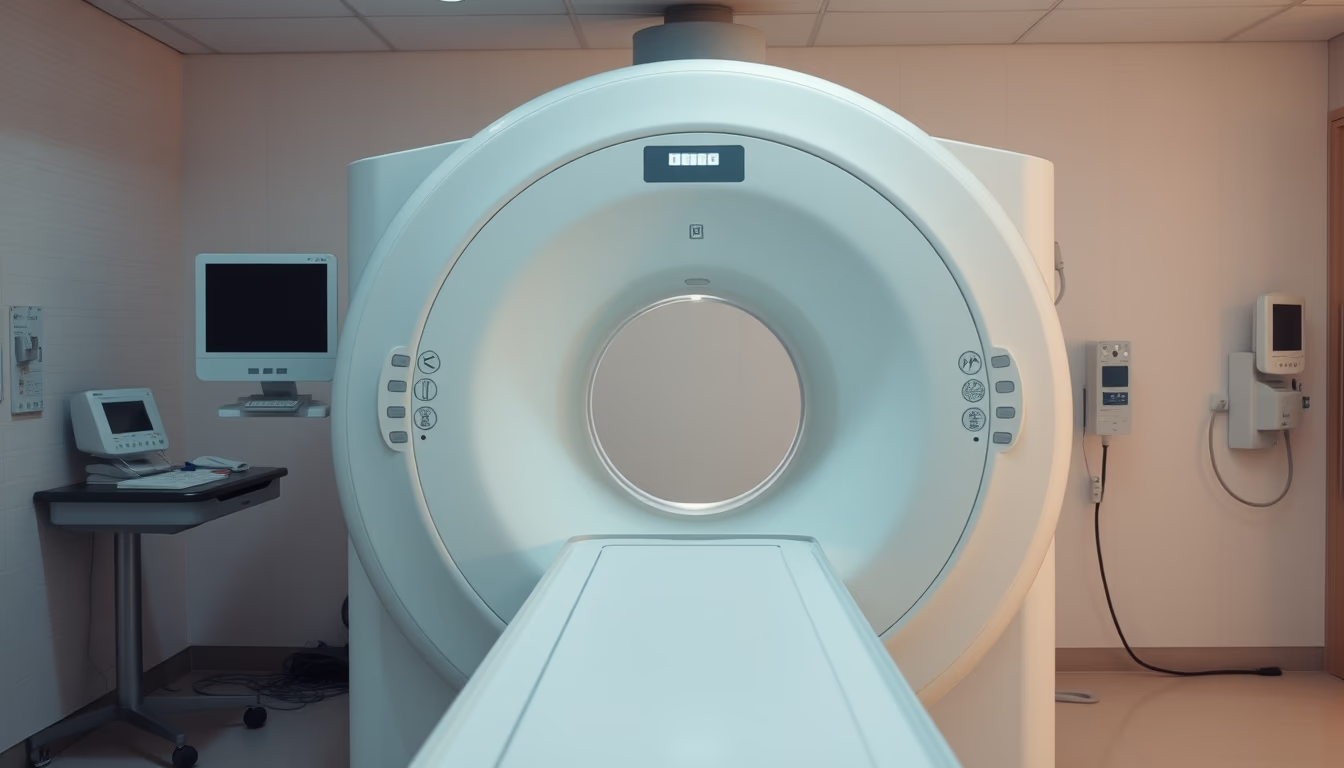
The magnetic resonance imaging (MRI) scanner is an essential diagnostic tool that uses magnetic fields and radio waves to create detailed images of the human body.
About this subject
Magnetic resonance imaging (MRI) is a non-invasive medical imaging technique that produces high-resolution three-dimensional images of organs and soft tissues. Unlike X-rays or CT scans, MRI does not use ionizing radiation, making it safer for repeated examinations. The physical principle is based on nuclear magnetic resonance: hydrogen protons in tissues are aligned by a strong magnetic field (typically 1.5 to 3 Tesla) and excited by radiofrequency pulses. As they relax, they emit signals that are processed by computer to form images.
The radiology department where the equipment is installed requires special care: shielding against external electromagnetic interference and cryogenic systems to maintain superconducting magnets at temperatures near absolute zero. The high cost of the equipment (between US$ 500,000 and US$ 3 million) and the need for specialized maintenance limit availability, concentrating MRI scanners in large hospitals and specialized clinics. In many countries, including Brazil, public health systems offer MRI exams, but demand often exceeds supply in some regions.
MRI is particularly useful for diagnosing tumors, brain lesions, spinal cord diseases, joint problems, and cardiovascular conditions. Functional MRI (fMRI) allows mapping brain activity during cognitive tasks. The technology continues to evolve: 7 Tesla machines are already in use for research, offering even higher resolution. The main contraindication is the presence of ferromagnetic metal implants, which can be displaced by the magnetic field.
Frequently Asked Questions
What is the difference between MRI and CT scan?
MRI uses magnetic fields and radio waves, no ionizing radiation, ideal for soft tissues. CT uses X-rays, better for bones and emergencies, but exposes the patient to radiation.
How long does an MRI scan take?
Typically 30 to 60 minutes, depending on the area being scanned and whether contrast is used. The patient must remain still to avoid artifacts.
Is it safe to have an MRI with dental implants or piercings?
Titanium and gold implants are safe, but steel piercings should be removed. Inform the technician about any metal in your body.
Direct URL
https://pub-c7d6a6ea828543ac903a74a341ccb2e1.r2.dev/imagens/mri-scanner-machine-in-radiology-department-symmetric-composition-overcast-soft-daylight.avifHow to credit
Include a visible link back to UtilizAí. Copy one of the snippets below:
<a href="https://xn--utiliza-eza.com/en/midia/imagens/mri-scanner-machine-in-radiology-department-symmetric-composition-overcast-soft-daylight">Mri scanner machine in radiology department</a> by <a href="https://xn--utiliza-eza.com">UtilizAí</a>, licensed under <a href="https://creativecommons.org/licenses/by/4.0/">CC BY 4.0</a>.
[Mri scanner machine in radiology department](https://xn--utiliza-eza.com/en/midia/imagens/mri-scanner-machine-in-radiology-department-symmetric-composition-overcast-soft-daylight) by [UtilizAí](https://xn--utiliza-eza.com), CC BY 4.0
License: CC-BY-4.0