Diagrama de pool de liquidez dois tokens fazendo swap em visualização de AMM
1344×768 · AVIF · CC BY 4.0
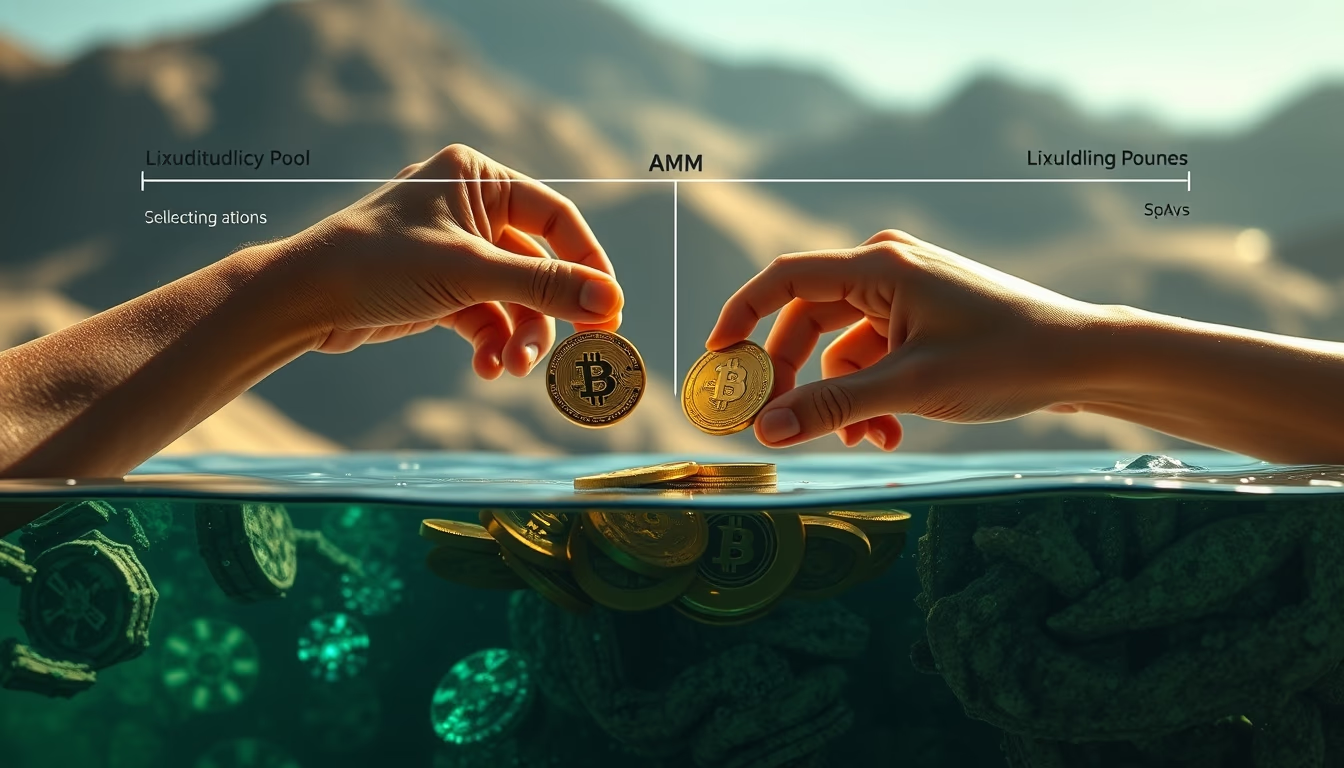
Um diagrama ilustra o funcionamento de um pool de liquidez com dois tokens em um Automated Market Maker (AMM), mostrando a troca entre eles.
Sobre o tema
Os Automated Market Makers (AMMs) revolucionaram as exchanges descentralizadas (DEXs) ao substituir as tradicionais carteiras de ordens por pools de liquidez. Nesses pools, dois tokens são depositados em proporções que definem seu preço relativo, seguindo uma fórmula matemática como x * y = k, onde x e y representam as reservas de cada token e k é uma constante. Quando um usuário realiza um swap, ele adiciona um token ao pool e retira o outro, alterando as reservas e, consequentemente, o preço. Esse modelo garante liquidez contínua, mesmo para pares com baixo volume de negociação, e é a base de protocolos como Uniswap e SushiSwap.
O diagrama típico de um pool de liquidez com dois tokens mostra visualmente o mecanismo de swap: de um lado, o token A é inserido; do outro, o token B é retirado. As proporções das reservas determinam a taxa de câmbio, que se ajusta automaticamente conforme a oferta e demanda. Esse sistema é conhecido como curva de ligação (bonding curve) e evita problemas de slippage em mercados voláteis, embora ainda exista o risco de perda impermanente para provedores de liquidez.
A popularidade dos AMMs cresceu exponencialmente desde 2020, impulsionada pelo boom das finanças descentralizadas (DeFi). Segundo dados da DeFi Llama, o valor total bloqueado em pools de liquidez ultrapassou US$ 50 bilhões em 2021. A visualização de diagramas como este é essencial para educar novos usuários sobre como funcionam as trocas descentralizadas, destacando a transparência e a autonomia proporcionadas pela blockchain.
Curiosamente, a fórmula x * y = k foi inspirada no conceito de “mercado de previsão” e adaptada por Hayden Adams, criador do Uniswap, em 2018. Desde então, variações como a fórmula de Balancer (com múltiplos tokens e pesos) e Curve (para stablecoins) ampliaram as possibilidades. O diagrama de pool de liquidez com dois tokens continua sendo a representação mais didática desse inovador mecanismo financeiro.
Perguntas frequentes
O que é um pool de liquidez em um AMM?
Um pool de liquidez é um conjunto de fundos bloqueados em um contrato inteligente, contendo dois ou mais tokens. Ele fornece liquidez para que usuários possam trocar tokens diretamente, sem a necessidade de uma contraparte tradicional.
Como funciona a fórmula x * y = k?
A fórmula x * y = k garante que o produto das reservas dos dois tokens permaneça constante após cada swap. Quando um token é adicionado, o outro é retirado na proporção que mantém k inalterado, ajustando automaticamente o preço.
O que é perda impermanente?
Perda impermanente é a perda temporária que provedores de liquidez podem sofrer quando o preço relativo dos tokens no pool se desvia do mercado externo. Ela se torna permanente se o provedor retirar os fundos durante essa divergência.
URL direta
https://pub-c7d6a6ea828543ac903a74a341ccb2e1.r2.dev/imagens/liquidity-pool-diagram-two-tokens-swapping-in-amm-visualization-documentary-photography-bright-midday-sun.avifComo creditar
Inclua um link visível de volta pro UtilizAí. Copie um dos snippets abaixo:
<a href="https://xn--utiliza-eza.com/midia/imagens/liquidity-pool-diagram-two-tokens-swapping-in-amm-visualization-documentary-photography-bright-midday-sun">Diagrama de pool de liquidez dois tokens fazendo swap em visualização de AMM</a> by <a href="https://xn--utiliza-eza.com">UtilizAí</a>, licensed under <a href="https://creativecommons.org/licenses/by/4.0/">CC BY 4.0</a>.
[Diagrama de pool de liquidez dois tokens fazendo swap em visualização de AMM](https://xn--utiliza-eza.com/midia/imagens/liquidity-pool-diagram-two-tokens-swapping-in-amm-visualization-documentary-photography-bright-midday-sun) by [UtilizAí](https://xn--utiliza-eza.com), CC BY 4.0
Licença: CC-BY-4.0
Tags
Imagens relacionadas
 Interface de mint de stablecoin mostrando taxa de colateralização
 Interface de mint de stablecoin mostrando taxa de colateralização
 Interface de mint de stablecoin mostrando taxa de colateralização
 Interface de mint de stablecoin mostrando taxa de colateralização
 Interface de mint de stablecoin mostrando taxa de colateralização
 Interface de mint de stablecoin mostrando taxa de colateralização