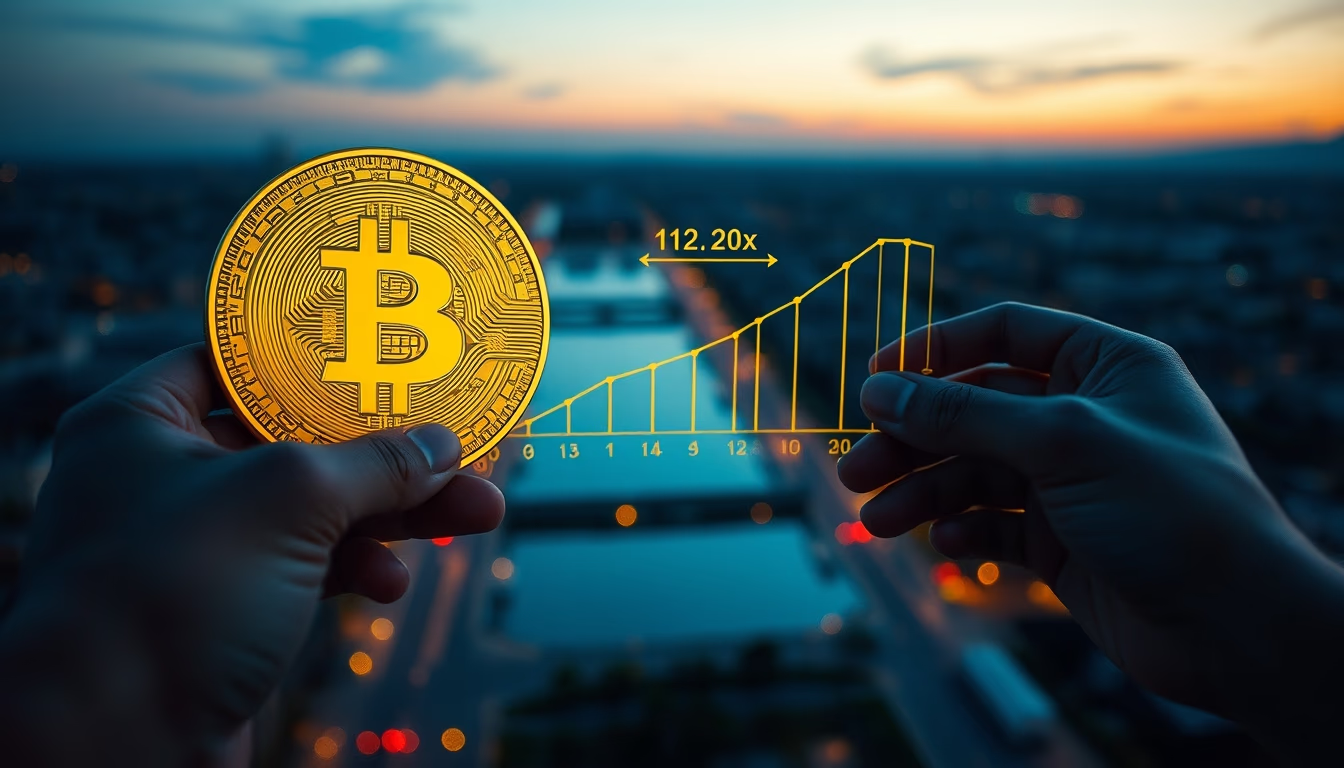
Diagrama de pool de liquidez dois tokens fazendo swap em visualização de AMM
1344×768 · AVIF · CC BY 4.0

Diagrama de pool de liquidez com dois tokens em swap, ilustrando o funcionamento de um AMM (Automated Market Maker) em DeFi.
Sobre o tema
Os Automated Market Makers (AMMs) revolucionaram a negociação de ativos digitais ao substituir livros de ordens tradicionais por pools de liquidez. Nesse modelo, dois tokens são depositados em um pool, e suas proporções determinam o preço de cada ativo de acordo com uma fórmula matemática, como x*y=k (produto constante). Quando um usuário realiza um swap, ele troca um token pelo outro, alterando as reservas e ajustando o preço automaticamente. Esse mecanismo permite negociações descentralizadas e contínuas, sem a necessidade de um intermediário centralizado.
Os pools de liquidez são a espinha dorsal de protocolos como Uniswap, SushiSwap e PancakeSwap, que juntos movimentam bilhões de dólares diariamente. A liquidez é fornecida por usuários que depositam pares de tokens e recebem taxas de negociação como recompensa. No entanto, os provedores de liquidez enfrentam riscos como perda impermanente, que ocorre quando a proporção dos tokens no pool se desvia do mercado externo.
A visualização de um AMM geralmente mostra duas curvas ou um diagrama de fluxo representando a troca entre ativos, como ETH e USDC. A eficiência desses sistemas depende da profundidade do pool e da volatilidade dos ativos. Em momentos de alta volatilidade, os AMMs podem sofrer com slippage (derrapagem de preço) maior, mas continuam sendo uma ferramenta essencial para a liquidez descentralizada.
Curiosidade: o conceito de AMM foi proposto pela primeira vez em 2016 por Vitalik Buterin, cofundador do Ethereum, mas ganhou tração com o lançamento do Uniswap em 2018. Hoje, existem variações como AMMs com taxas dinâmicas e pools de múltiplos ativos, ampliando as possibilidades de negociação automatizada.
Perguntas frequentes
O que é um pool de liquidez em DeFi?
Um pool de liquidez é um conjunto de fundos bloqueados em um contrato inteligente, usado para facilitar negociações descentralizadas. Os provedores depositam pares de tokens e recebem taxas em troca.
Como funciona a fórmula x*y=k em um AMM?
A fórmula x*y=k mantém o produto das reservas de dois tokens constante. Quando um token é comprado, sua reserva diminui e o preço aumenta, ajustando automaticamente a taxa de câmbio.
O que é perda impermanente?
Perda impermanente é a diferença temporária no valor dos ativos depositados em um pool em comparação com mantê-los fora do pool. Ela se torna permanente se o provedor retirar a liquidez durante uma oscilação de preço.
URL direta
https://pub-c7d6a6ea828543ac903a74a341ccb2e1.r2.dev/imagens/liquidity-pool-diagram-two-tokens-swapping-in-amm-visualization-aerial-drone-shot-golden-hour-late-afternoon.avifComo creditar
Inclua um link visível de volta pro UtilizAí. Copie um dos snippets abaixo:
<a href="https://xn--utiliza-eza.com/midia/imagens/liquidity-pool-diagram-two-tokens-swapping-in-amm-visualization-aerial-drone-shot-golden-hour-late-afternoon">Diagrama de pool de liquidez dois tokens fazendo swap em visualização de AMM</a> by <a href="https://xn--utiliza-eza.com">UtilizAí</a>, licensed under <a href="https://creativecommons.org/licenses/by/4.0/">CC BY 4.0</a>.
[Diagrama de pool de liquidez dois tokens fazendo swap em visualização de AMM](https://xn--utiliza-eza.com/midia/imagens/liquidity-pool-diagram-two-tokens-swapping-in-amm-visualization-aerial-drone-shot-golden-hour-late-afternoon) by [UtilizAí](https://xn--utiliza-eza.com), CC BY 4.0
Licença: CC-BY-4.0
Tags
Imagens relacionadas
 Interface de mint de stablecoin mostrando taxa de colateralização
 Interface de mint de stablecoin mostrando taxa de colateralização
 Interface de mint de stablecoin mostrando taxa de colateralização
 Interface de mint de stablecoin mostrando taxa de colateralização
 Interface de mint de stablecoin mostrando taxa de colateralização
 Interface de mint de stablecoin mostrando taxa de colateralização