Dark web concept anonymous
1344×768 · AVIF · CC BY 4.0
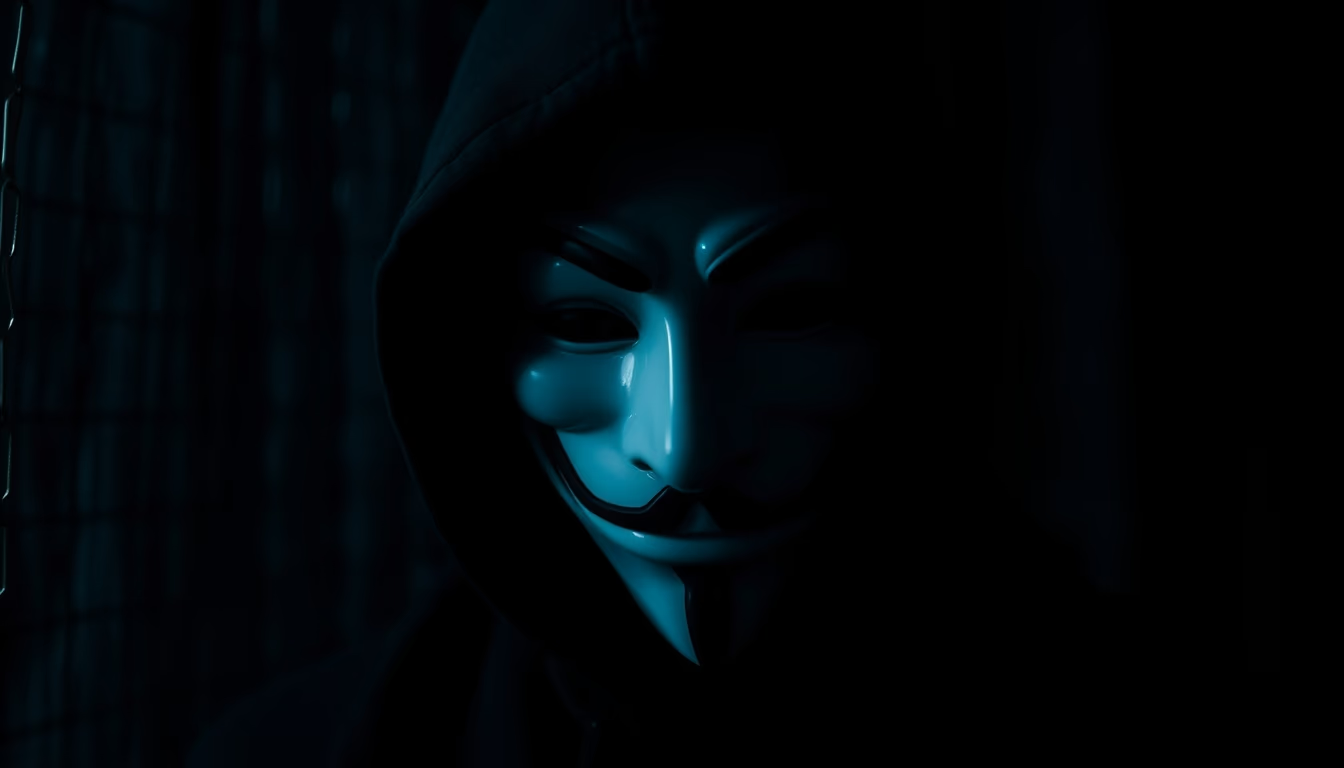
The concept of anonymity on the dark web, a hidden layer of the internet that uses networks like Tor to protect users' identities, raises questions about privacy and criminality.
About this subject
The dark web is a part of the internet not indexed by conventional search engines, requiring specific software like Tor (The Onion Router) to access. The anonymity provided by this network is achieved through layered encryption routing, which hides the user's IP address and makes online activity difficult to trace. Although often associated with illicit activities such as black markets and hacker forums, the dark web also serves as a vital tool for political dissidents, journalists, and citizens in authoritarian regimes who need to avoid government surveillance.
The technology behind dark web anonymity is not inherently illegal. Tor, for instance, was originally developed by the United States Navy to protect government communications. Today, its legitimate uses include private browsing, protection against ISP surveillance, and access to censored content. However, the same anonymity that protects activists can also be exploited for cybercrimes like drug, weapon, and stolen data trafficking. This creates a dilemma for authorities seeking ways to combat crime without compromising citizens' privacy.
The concept of anonymity on the dark web is often misunderstood. Many people believe the dark web is completely anonymous, but there are de-anonymization techniques, such as traffic analysis and software vulnerability exploits. Historically, police operations like the takedown of Silk Road have shown that it is possible to identify and arrest criminals even in anonymous environments. This reinforces the idea that internet anonymity is a spectrum, not an absolute guarantee.
Culturally, the dark web has inspired fiction, films, and debates about digital ethics. In Brazil, access to the dark web is a reality for many users interested in digital security, but it remains shrouded in myths. With increasing privacy concerns in the post-Snowden world, the debate over the boundaries between security and anonymity becomes ever more relevant. The image "Dark web concept anonymous" captures this duality, visually representing the tension between freedom and control in the information age.
Frequently Asked Questions
What is the dark web and how does its anonymity work?
The dark web is a hidden part of the internet that requires special software like Tor to access. Its anonymity is achieved through layered encryption routing, which hides the user's IP address and makes online activities difficult to trace.
Is the dark web only used for illegal activities?
No. Although it is notorious for illegal markets and criminal forums, the dark web also serves journalists, activists, and citizens in repressive countries to avoid censorship and government surveillance.
Can you be tracked on the dark web?
Yes, while anonymity is strong, techniques such as traffic analysis, software vulnerability exploits, and coordinated police operations have successfully identified and arrested criminals on the dark web. Anonymity is not absolute.
Direct URL
https://pub-c7d6a6ea828543ac903a74a341ccb2e1.r2.dev/imagens/dark-web-concept-anonymous-fine-art-photography-p6.avifHow to credit
Include a visible link back to UtilizAí. Copy one of the snippets below:
<a href="https://xn--utiliza-eza.com/en/midia/imagens/dark-web-concept-anonymous-fine-art-photography-p6">Dark web concept anonymous</a> by <a href="https://xn--utiliza-eza.com">UtilizAí</a>, licensed under <a href="https://creativecommons.org/licenses/by/4.0/">CC BY 4.0</a>.
[Dark web concept anonymous](https://xn--utiliza-eza.com/en/midia/imagens/dark-web-concept-anonymous-fine-art-photography-p6) by [UtilizAí](https://xn--utiliza-eza.com), CC BY 4.0
License: CC-BY-4.0