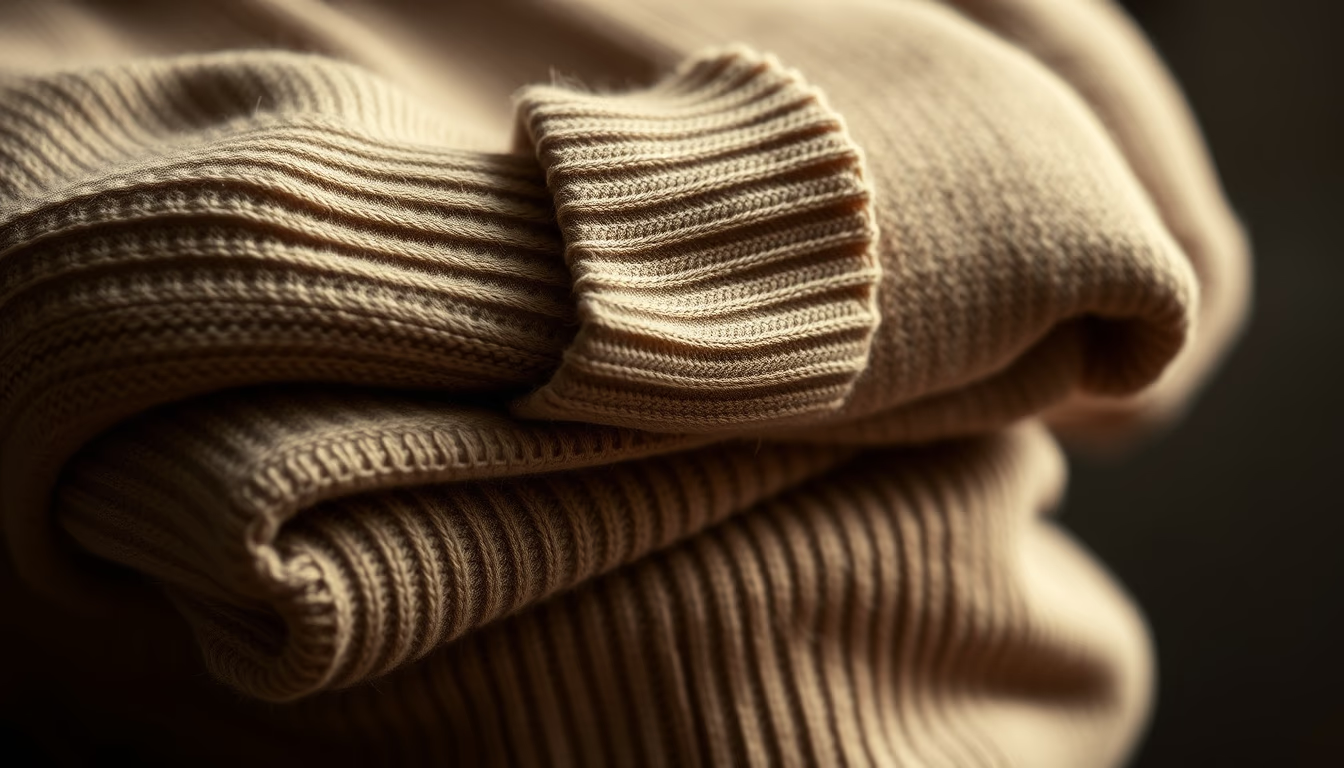
Cashmere sweater folded
1344×768 · AVIF · CC BY 4.0

Cashmere is a luxurious textile fiber obtained from the cashmere goat's undercoat, prized for its softness, lightness, and thermal insulation.
About this subject
Cashmere is a highly prized natural fiber derived from the soft undercoat of cashmere goats native to the Kashmir region, straddling India, Pakistan, and China. Though named after Kashmir, most of today's global supply comes from China and Mongolia. Each goat yields only about 150 grams of raw cashmere per year, contributing to its high cost.
Harvested during the molting season (usually spring) through combing or shearing, the fiber undergoes thorough cleaning, degreasing, separation of coarse guard hairs, and spinning. Finer fibers (under 19 microns in diameter) command premium prices. A single high-quality cashmere sweater may require fleece from two to three goats.
Cashmere is renowned for being up to eight times warmer than sheep wool, while being lighter and softer. Special care is needed: hand-wash or gentle cycle in cold water, dry flat, and store away from moths. Counterfeit or low-blend cashmere is common; labeling regulations in many countries require disclosure of cashmere percentage.
Interestingly, cashmere gained luxury status in the West during the 19th century when British traders imported it from colonial India. Today, sustainable production and fair trade are pressing challenges, as extensive goat farming can lead to desertification in fragile regions like the Tibetan Plateau.
Frequently Asked Questions
How to distinguish real cashmere from fakes?
Check the label: cashmere percentage must be stated (e.g., 100% cashmere). Burn a strand: real cashmere burns slowly, smells like burnt hair, and leaves powdery ash. Synthetic fibers melt and form hard beads.
What is the best way to wash a cashmere sweater?
Hand wash in cold water with mild detergent (or gentle shampoo). Do not rub or wring. Rinse, gently press out excess water, and dry flat on a towel. Avoid washing machines and dryers.
Why is cashmere so expensive?
Each goat yields only about 150 grams of raw fiber per year. Harvesting, separating, and spinning are labor-intensive. High global demand and limited supply due to specific climatic and environmental conditions also drive up the price.
Direct URL
https://pub-c7d6a6ea828543ac903a74a341ccb2e1.r2.dev/imagens/cashmere-sweater-folded-aerial-drone-shot-fresh14.avifHow to credit
Include a visible link back to UtilizAí. Copy one of the snippets below:
<a href="https://xn--utiliza-eza.com/en/midia/imagens/cashmere-sweater-folded-aerial-drone-shot-fresh14">Cashmere sweater folded</a> by <a href="https://xn--utiliza-eza.com">UtilizAí</a>, licensed under <a href="https://creativecommons.org/licenses/by/4.0/">CC BY 4.0</a>.
[Cashmere sweater folded](https://xn--utiliza-eza.com/en/midia/imagens/cashmere-sweater-folded-aerial-drone-shot-fresh14) by [UtilizAí](https://xn--utiliza-eza.com), CC BY 4.0
License: CC-BY-4.0