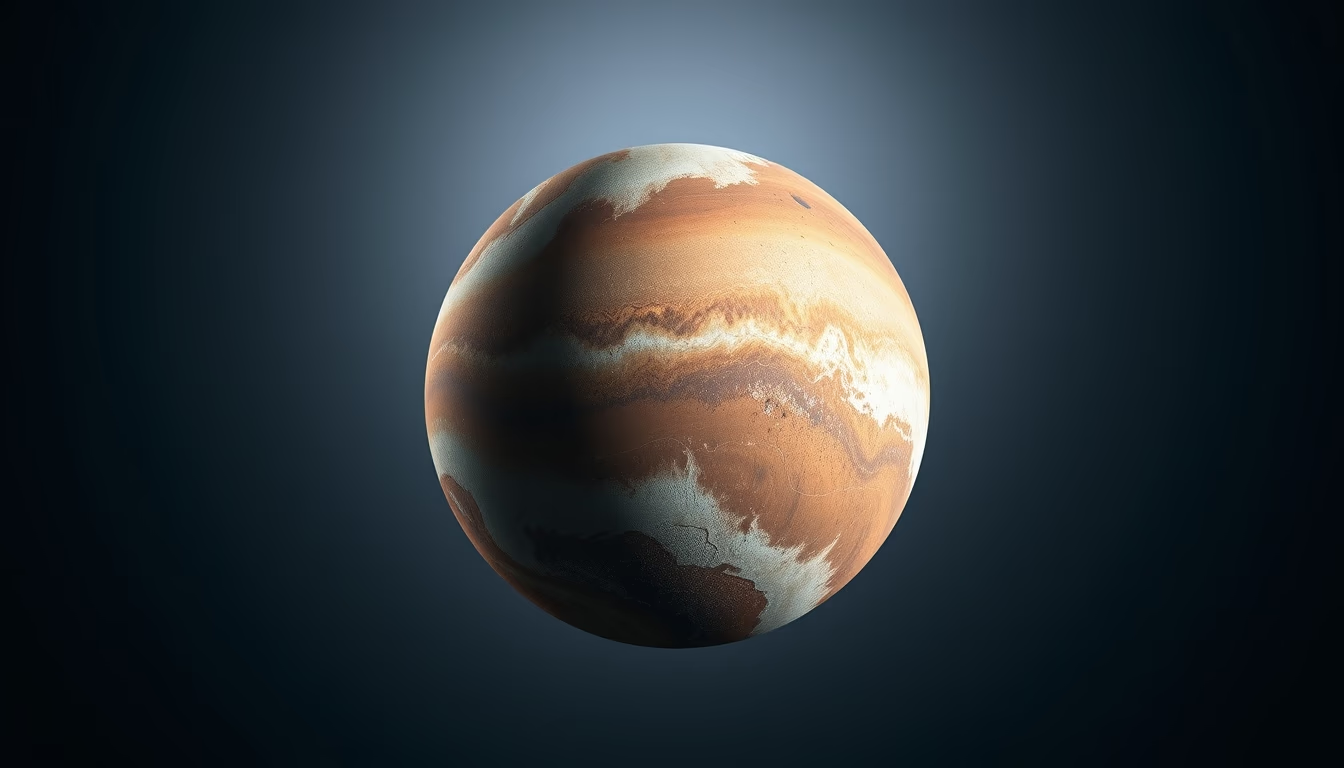
Binary star sunset
1344×768 · AVIF · CC BY 4.0

In binary star systems, sunsets can feature two suns on the horizon, a common phenomenon on exoplanets discovered orbiting double stars.
About this subject
Binary star systems consist of two stars orbiting a common center of mass. About half of all stars in the Milky Way are part of binary or multiple systems, making these arrangements extremely common in the universe. The presence of planets in such systems has been confirmed, such as Kepler-16b, a Saturn-sized exoplanet orbiting two yellow and red dwarf stars about 200 light-years from Earth. Discovered in 2011, it was the first planet detected transiting a binary star pair, and its orbit lies within the habitable zone, though it is a gas giant.
The possibility of life on planets around binary stars depends on orbital stability and radiation received. Planets can orbit one star (S-type) or both (P-type, like Tatooine in Star Wars). The habitable zone in binary systems is more complex, as radiation from two stars can cause extreme thermal variations. However, simulations suggest that rocky planets in stable orbits could maintain liquid water, especially if the stars are close together.
Interestingly, the concept of a 'double sunset' popularized by science fiction films has a real basis in systems like Kepler-16b and Kepler-47, which hosts two planets orbiting a pair of stars. Astronomers use the transit method to detect these worlds, observing small dips in starlight when a planet passes in front of them. As of 2023, more than a dozen exoplanets in binary systems have been confirmed, expanding our understanding of the diversity of planetary architectures in the cosmos.
Frequently Asked Questions
Is it possible to have life on planets with two suns?
Yes, it is theoretically possible, provided the planet is in a stable orbit within the habitable zone where liquid water can exist. The combined radiation from the two stars can be balanced if they are close together and the planet is far away, as in circumbinary planets.
How many exoplanets have been discovered in binary systems?
As of 2023, more than a dozen exoplanets have been confirmed in binary star systems, including Kepler-16b, Kepler-34b, and Kepler-35b. Most were discovered by the Kepler space telescope.
How do astronomers detect planets in double star systems?
The most common method is the transit method, where the planet crosses in front of one of the stars, causing a small dip in brightness. In binary systems, transits can occur around either star, and variations in transit timing help confirm the planet's presence.
Direct URL
https://pub-c7d6a6ea828543ac903a74a341ccb2e1.r2.dev/imagens/binary-star-sunset-fish-eye-wide-angle-fresh14.avifHow to credit
Include a visible link back to UtilizAí. Copy one of the snippets below:
<a href="https://xn--utiliza-eza.com/en/midia/imagens/binary-star-sunset-fish-eye-wide-angle-fresh14">Binary star sunset</a> by <a href="https://xn--utiliza-eza.com">UtilizAí</a>, licensed under <a href="https://creativecommons.org/licenses/by/4.0/">CC BY 4.0</a>.
[Binary star sunset](https://xn--utiliza-eza.com/en/midia/imagens/binary-star-sunset-fish-eye-wide-angle-fresh14) by [UtilizAí](https://xn--utiliza-eza.com), CC BY 4.0
License: CC-BY-4.0