Airport terminal modern with travelers walking
1344×768 · AVIF · CC BY 4.0
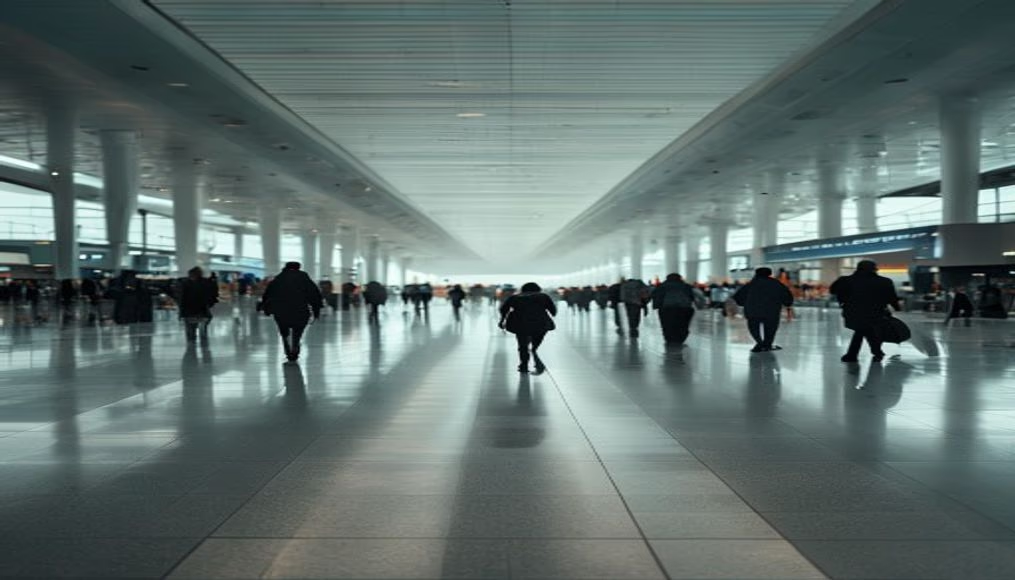
Modern airport terminals are hubs of global flow, designed for efficiency and comfort, reflecting contemporary architecture.
About this subject
Modern airport terminals have evolved significantly since the early days of commercial aviation. Originally simple functional structures, they are now complex architectural projects prioritizing passenger experience. They feature large open spaces, extensive use of glass and steel, and intuitive signage systems. Symmetry is often employed to facilitate navigation and create a sense of order, while soft natural light, such as on overcast days, reduces traveler stress. Major international airports like Singapore Changi or London Heathrow exemplify this, offering not only functionality but also indoor gardens, leisure areas, and public art. Safety and efficient passenger flow are priorities, with designs separating arrivals and departures to minimize congestion. Technology plays a crucial role, with automated check-ins, biometric scanners, and smart baggage systems. Modern terminal architecture often reflects local culture, as seen in Denver International Airport's roof inspired by the Rocky Mountains or Kuala Lumpur Airport's elements of Malay architecture. Despite pandemic and sustainability challenges, terminals continue to adapt, incorporating eco-friendly materials and advanced ventilation systems. For frequent travelers, these spaces have become almost a second home, with lounges, restaurants, and shops offering comfort and convenience.
Frequently Asked Questions
What are the main features of a modern airport terminal?
Key features include large open spaces, use of glass and steel for natural light, symmetrical design for easy navigation, intuitive signage, and integrated technology like automated check-in and biometric scanners.
How does airport terminal architecture reflect local culture?
Many terminals incorporate regional cultural elements, such as Denver International Airport's roof inspired by the Rocky Mountains or Kuala Lumpur Airport with Malay architectural details, creating a unique identity.
Why is natural lighting important in airport terminals?
Natural lighting, especially on overcast days, reduces passenger stress and improves well-being while saving energy. Large windows and skylights are common to maximize daylight.
Direct URL
https://pub-c7d6a6ea828543ac903a74a341ccb2e1.r2.dev/imagens/airport-terminal-modern-with-travelers-walking-symmetric-composition-overcast-soft-daylight.avifHow to credit
Include a visible link back to UtilizAí. Copy one of the snippets below:
<a href="https://xn--utiliza-eza.com/en/midia/imagens/airport-terminal-modern-with-travelers-walking-symmetric-composition-overcast-soft-daylight">Airport terminal modern with travelers walking</a> by <a href="https://xn--utiliza-eza.com">UtilizAí</a>, licensed under <a href="https://creativecommons.org/licenses/by/4.0/">CC BY 4.0</a>.
[Airport terminal modern with travelers walking](https://xn--utiliza-eza.com/en/midia/imagens/airport-terminal-modern-with-travelers-walking-symmetric-composition-overcast-soft-daylight) by [UtilizAí](https://xn--utiliza-eza.com), CC BY 4.0
License: CC-BY-4.0